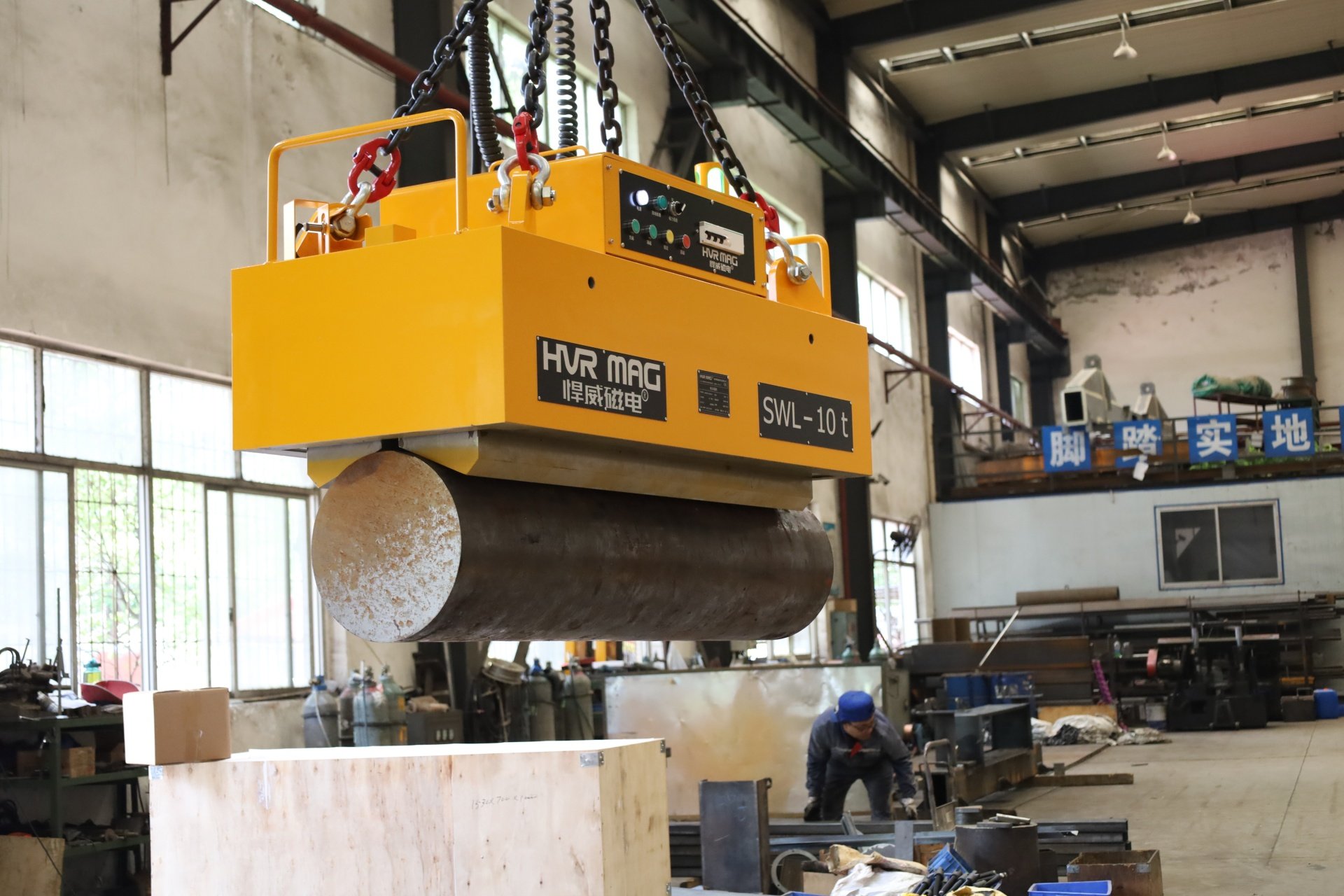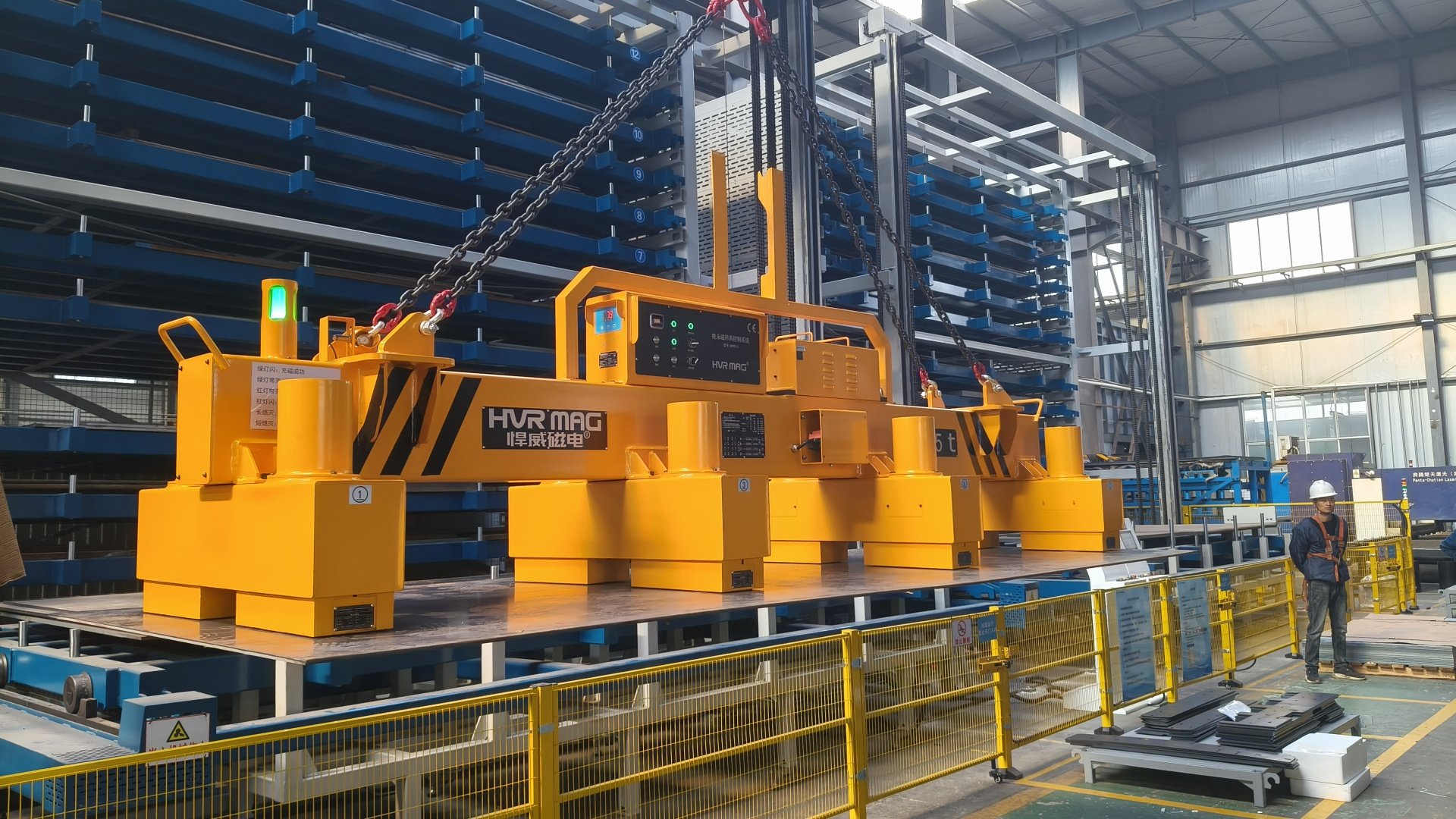



A steel plate lifter is a specialized device for moving heavy carbon steel plates. These tools attach to cranes or hoists to transport metal safely. In heavy industry, moving massive plates requires high precision and immense force. Traditional methods often use chains, hooks, or clamps to secure the load. However, these mechanical tools can damage plate edges or slip during transit.
HVR MAG focuses on electro-permanent magnetic technology for these handling challenges. Our electro permanent magnetic plate lifter systems offer a modern alternative to traditional mechanical or electromagnetic lifting tools. Understanding how these systems work helps operators select the most efficient equipment.
Core Technologies in Plate Lifter
Currently, three main technologies dominate the industrial plate lifter market. First, mechanical lifters use gravity-activated clamps to grip the material. Second, vacuum lifters create a pressure seal on the plate surface. Finally, magnetic lifters use magnetic flux to create a powerful bond.
Among these, the electro-permanent steel plate lifter provides unique technical advantages. This system uses electricity only to switch the magnetic state. Once activated, the permanent magnets provide all the holding force. Consequently, the magnet maintains its grip even during a total power failure. This feature eliminates the risk of dropped loads due to electrical issues.
How Magnetic Flux Control Works
To lift a single sheet from a stack, a plate lifter must control its magnetic depth. Standard magnets often pick up two or three plates by mistake. This happens because the magnetic flux penetrates too deeply into the stack.
HVR MAG designs use specialized flux control to solve this problem. Operators can adjust the magnetic intensity based on the plate thickness. Therefore, the magnetic field only enters the top plate. This precision is essential for automated cutting lines and laser feeding systems. Furthermore, the flat contact surface prevents any physical deformation of the metal.

Key Technical Factors of EPM Plate Lifter
When evaluating lifting equipment for steel plates, several technical factors matter:
- Air Gaps: Dust, scale, or rust creates a gap between the magnet and the plate.
- Plate Thickness: Thinner plates cannot absorb the full magnetic flux.
- Surface Temperature: High heat can reduce the lifting capacity of standard magnets.
- Material Grade: Low-carbon steel provides the best magnetic permeability.
Moreover, a high-quality magnetic spreader beam helps handle extra-long plates. These beams prevent the steel from sagging or bending during the lift. By distributing the weight across multiple points, you ensure a level and stable transport.
Comparison of Lifting Methods
In conclusion, a modern steel plate lifter improves both safety and efficiency. By choosing the right technology, facilities reduce maintenance and protect their valuable materials.