

In modern manufacturing, efficiency and precision are paramount. For one leading steel pipe and axle producer, the transition from manual handling to robotic automation with magnetic gripper in robotics marked a turning point in their production capabilities. This case study explores how this innovative solution addressed critical pain points while delivering measurable improvements across their operations.https://hvr-magnet.com/industrial-automation-and-robotics-manufacturer/
The Challenge: Limitations of Manual Handling
The company’s production line required handling cylindrical workpieces ranging from 55.88-200.03mm in diameter, with lengths up to 323mm and weights reaching 31.8kg. Their manual process presented several challenges:
Labor Intensive Operations
Required two workers per shift for loading/unloading
Slow cycle times averaging 45 seconds per piece
Quality Control Issues
Frequent surface damage from mechanical clamps
Deformation occurring in 8% of workpieces
Workplace Safety Concerns
Multiple lifting-related injuries reported annually
Ergonomic strain from repetitive heavy lifting
Process Inefficiencies
Inconsistent positioning affecting downstream machining
Limited capacity for 24/7 production
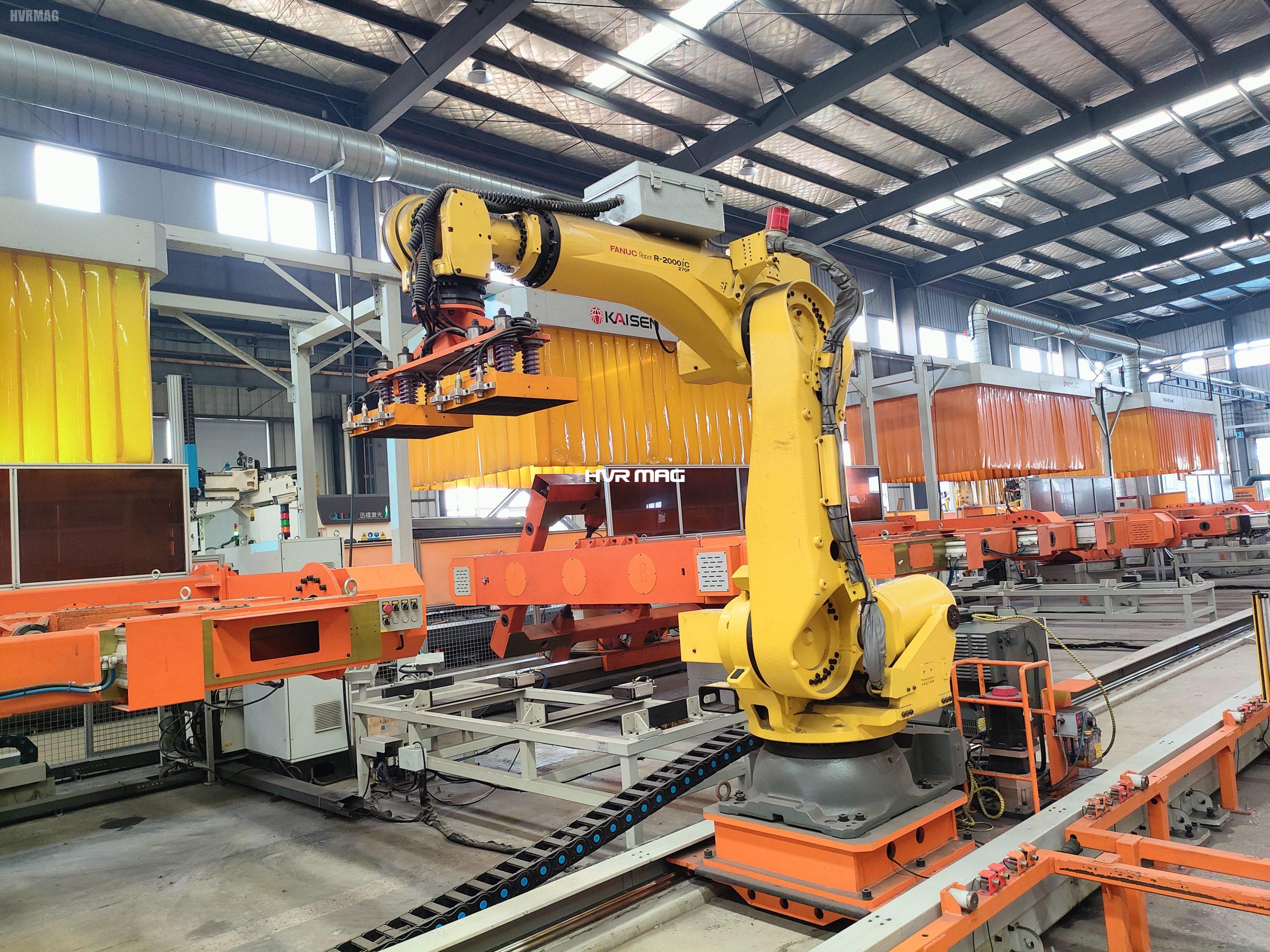
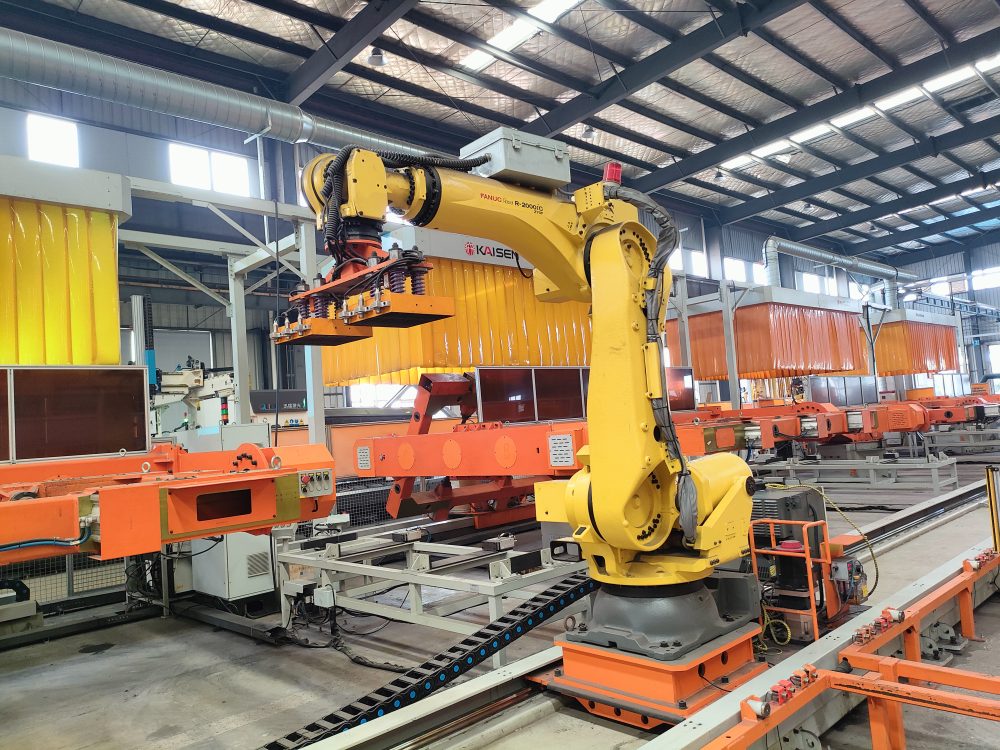 Our engineered solution combined industrial robotics with advanced electro-permanent magnetic gripper technology, featuring:
Core System Components
Modular gripper arrays with adaptive magnetic field control
Robot-mounted end effectors for multi-axis manipulation
Integrated safety monitoring and collision detection
Key Technological Advantages
Precision Handling
Automatic centering based on workpiece dimensions
Gentle yet secure grip strength (adjustable 50-500N)
Flexible Configurations
Quick-change tooling for different pipe diameters
180° flipping capability for orientation changes
Smart Integration
Seamless communication with existing PLC systems
Real-time performance monitoring