

Ports handling steel products face several challenges: heavy loads, different material shapes, demanding outdoor conditions, and the need to maintain efficient loading and unloading operations. Choosing the right lifting equipment is essential for improving productivity while managing operational risks and costs.
Electro-permanent magnet lifters offer a practical solution for handling various ferromagnetic steel products. With application-specific designs, they can support port operations involving steel slabs, billets, steel coils, profiles, and multiple steel plates.
1. Why Do Ports Need Specialized Magnetic Lifting Equipment?
Steel products handled in ports vary greatly in weight, shape, dimensions, and arrangement. A lifting solution suitable for steel slabs may not be suitable for steel coils or bundled profiles.
At the same time, port equipment often operates outdoors in humid, salt-laden environments, with frequent lifting cycles and tight vessel turnaround schedules.
For port operators, the key considerations are not simply lifting capacity. They also include load compatibility, safe handling, operational efficiency, equipment reliability, and the ability to integrate with existing cranes and mobile handling machines.
A properly designed magnetic lifting system should address these requirements according to the actual working conditions.
2. How Do Electro-Permanent Magnet Lifters Work?
An electro-permanent magnet lifter combines permanent magnets, excitation coils, magnetic components, and a control system.
A short electrical pulse changes the magnetic circuit to activate or deactivate the lifting force. Once the magnet is activated, it can maintain its magnetic holding force without continuous power.
This operating principle offers two important benefits for port handling:
- Power-loss holding: The magnetic holding force can remain after a power interruption, subject to the equipment design and operating conditions.
- Reduced energy consumption: Electricity is mainly required for magnetization and demagnetization rather than continuous holding.
These characteristics can help port operators improve energy efficiency while reducing dependence on continuous electrical power. Proper equipment selection, monitoring, and operating procedures remain essential for safe lifting.
3. Solutions for Different Steel Handling Applications
Different steel products require different magnetic pole arrangements, lifting capacities, and control strategies. Selecting a lifter designed for the specific material is important for reliable operation.
Steel Slab and Billet Lifting
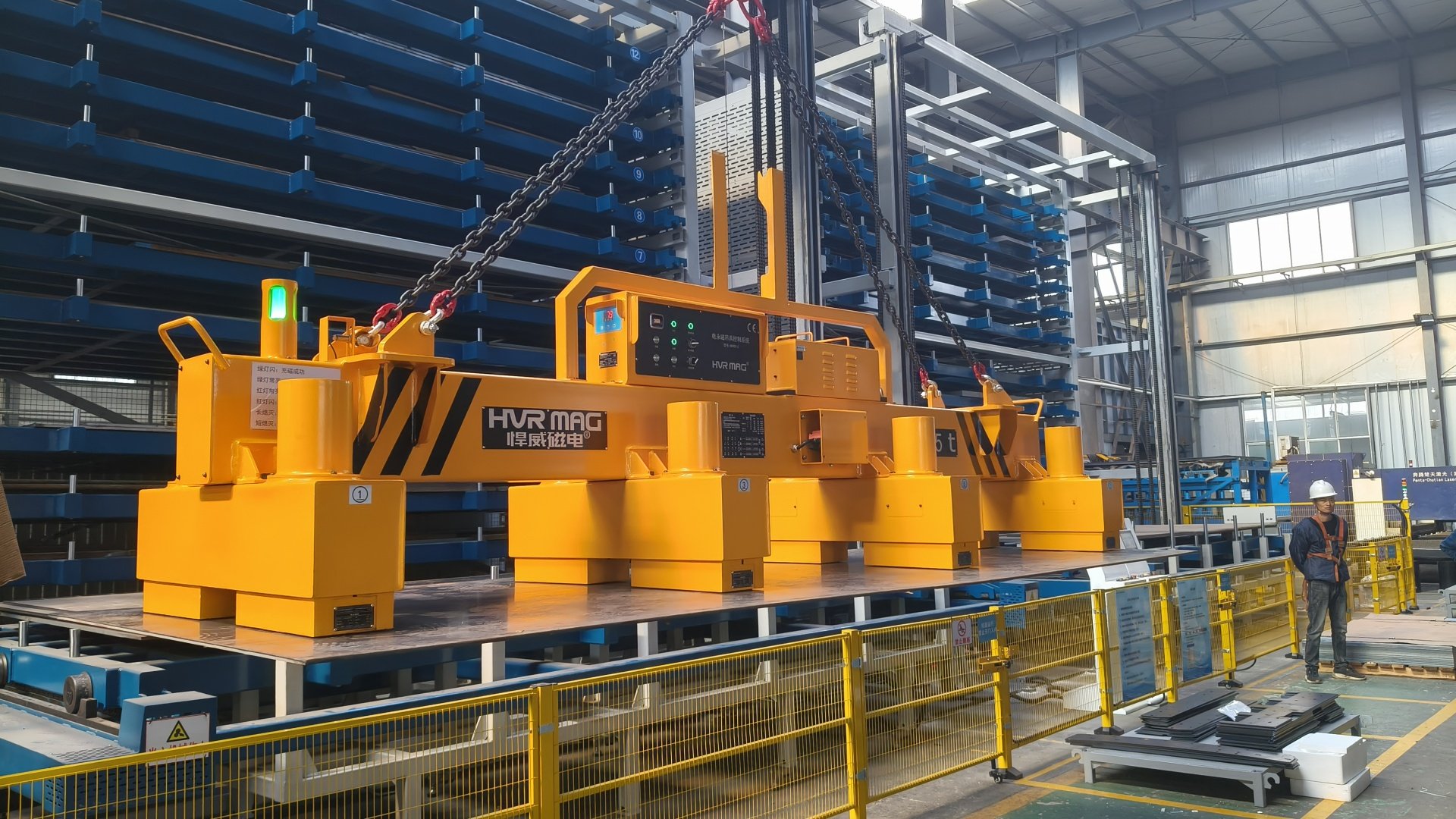
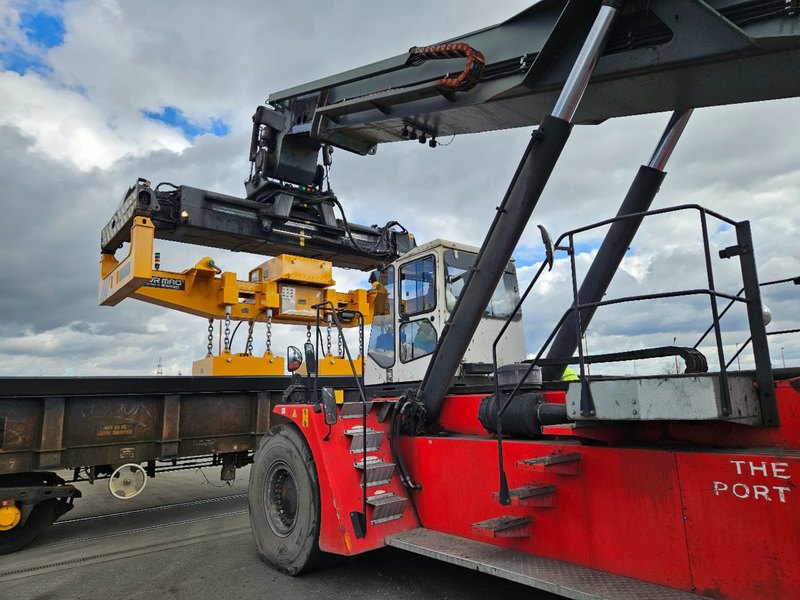
Steel slabs and billets are often heavy and may need to be handled individually or in rows. Modular electro-permanent magnet lifters can be configured for these loads and designed to work with equipment such as reach stackers, gantry cranes, and quay cranes.
HVR MAGNET’s portfolio includes slab lifting solutions with capacities of 40 tonnes and above for suitable configurations. The appropriate capacity and arrangement depend on the load dimensions, weight distribution, and lifting equipment.
Steel Coil Lifting
Steel coils can be stored and handled horizontally or vertically, creating different lifting requirements.
For horizontal coils, V-shaped or curved magnetic pole surfaces can be designed to match the coil geometry. For vertical coils and mobile handling applications, battery-powered lifters can provide greater flexibility where an external power supply is inconvenient.
The lifter should be selected according to coil orientation, weight, dimensions, and the supporting crane or vehicle.
Bundled Profiles and Round Steel
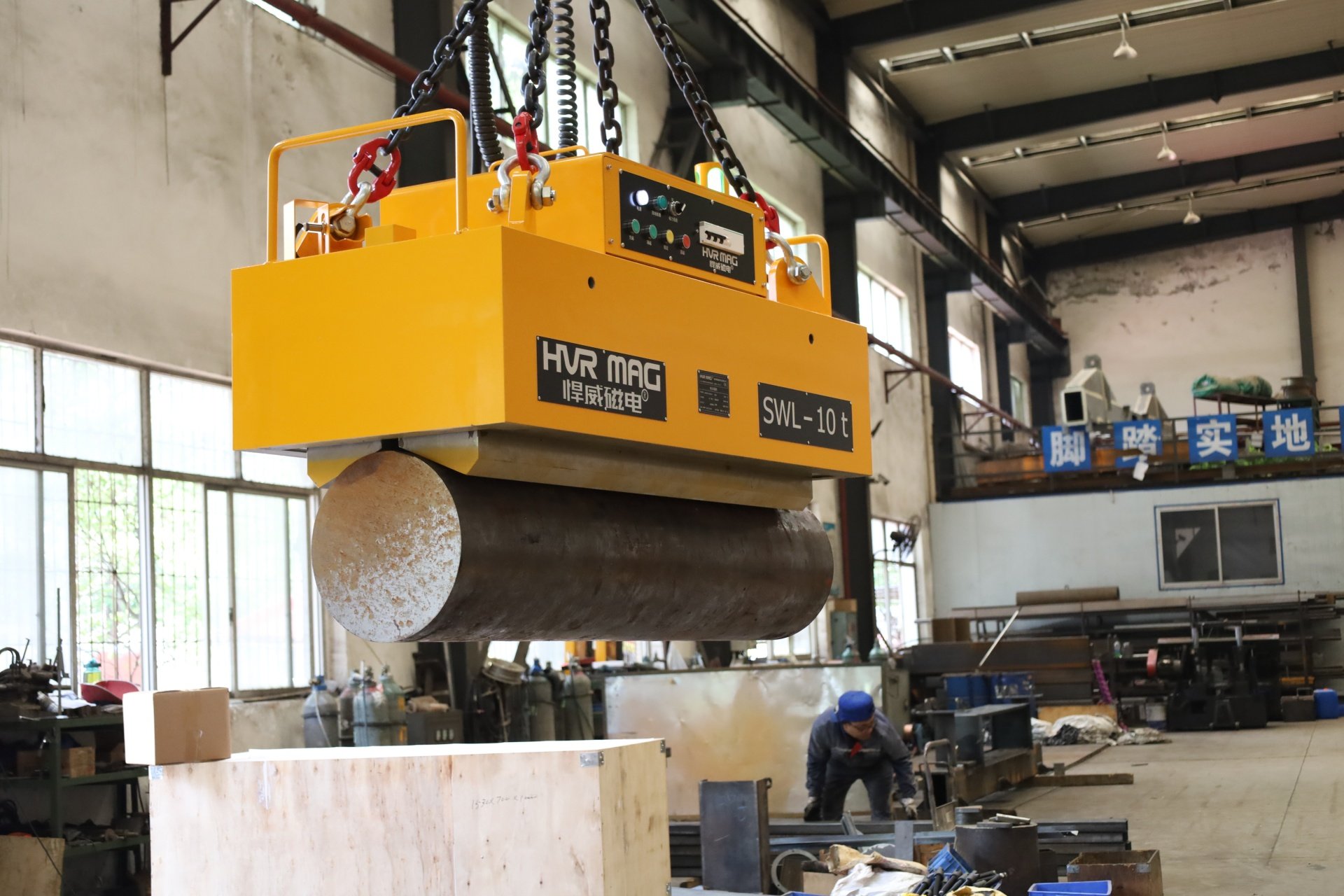
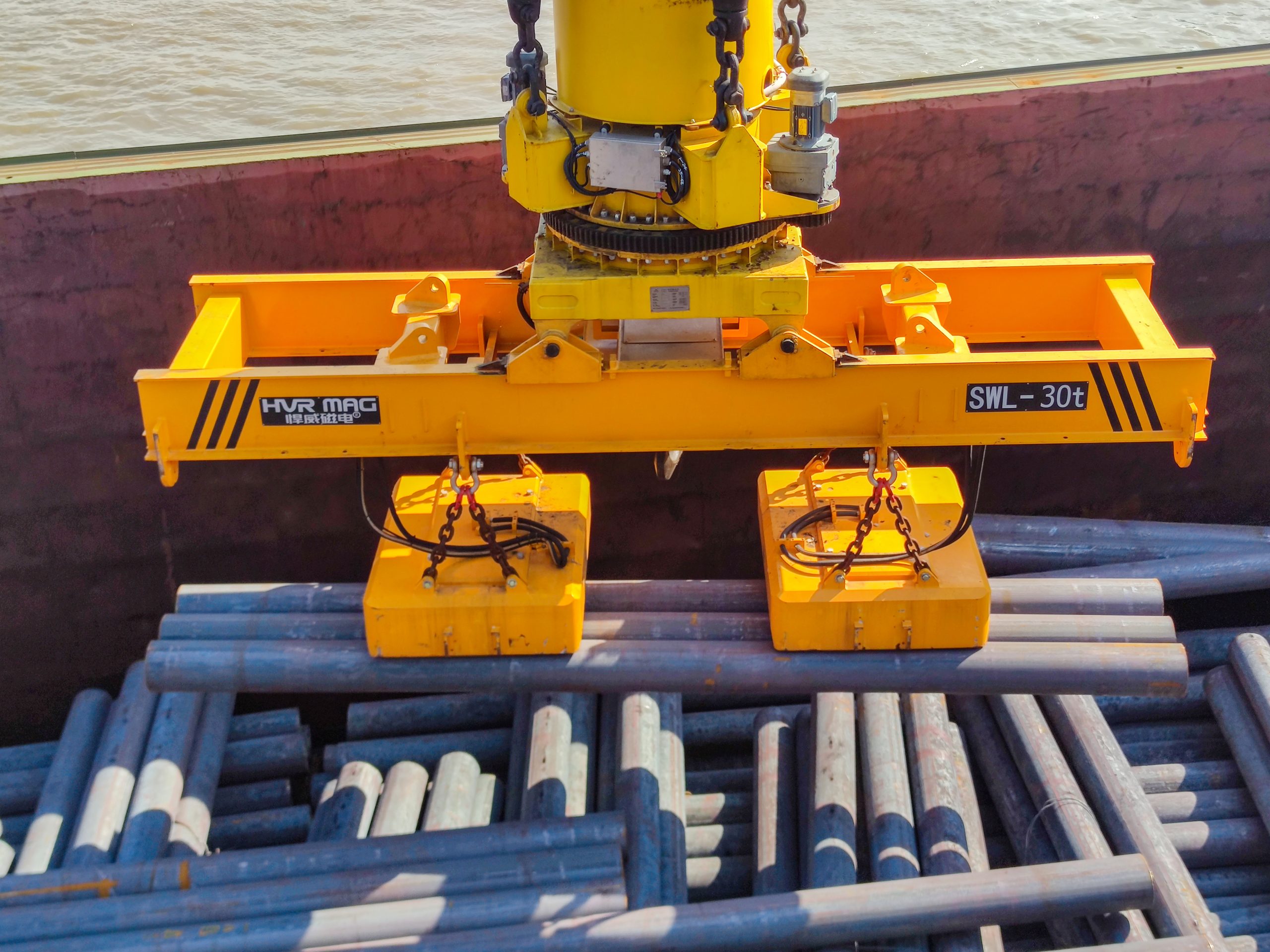
Steel profiles, round bars, and bundled materials can have irregular shapes or multiple contact points. A customized arrangement of magnetic modules helps match the load layout and distribute the holding force appropriately.
Compared with some mechanical clamping methods, magnetic lifting can also reduce direct clamping contact with the material surface. The suitability of magnetic handling depends on the steel type, bundle arrangement, and surface conditions.
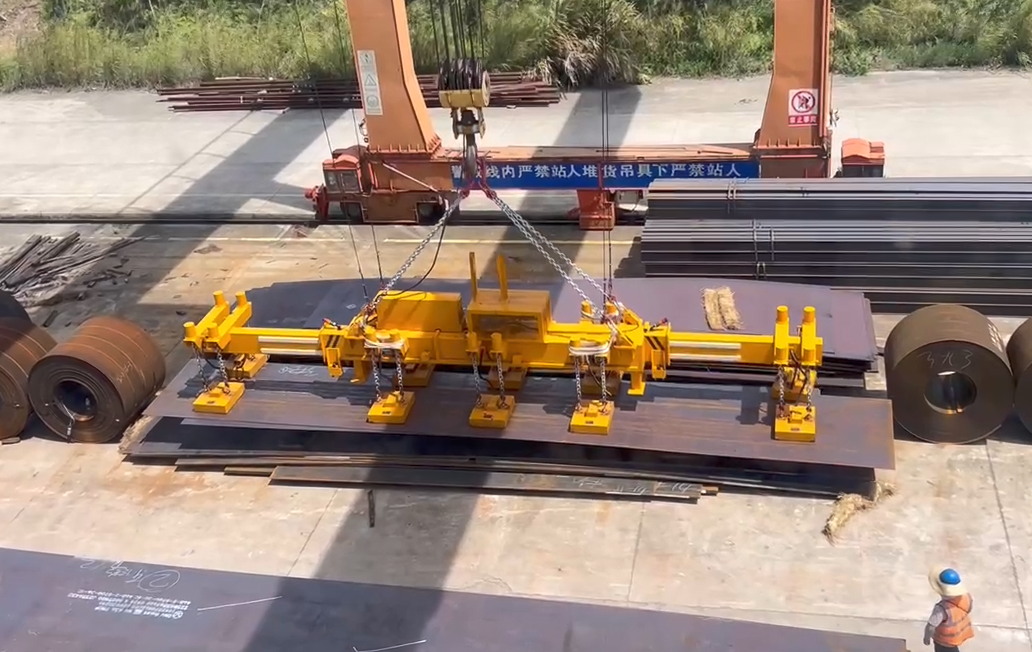
Multiple Steel Plate Lifting
Handling multiple steel plates requires careful control of the magnetic force. Depending on the plate thickness and operating requirements, an adjustable magnetic system can be designed for single-plate separation or multi-plate lifting.
Correct configuration is important to help avoid unintended lifting of additional plates. Plate thickness, dimensions, surface condition, and the required number of plates should all be considered during system design.
4. Which Port Equipment Can Use Electro-Permanent Magnet Lifters?
Electro-permanent magnet lifters can be engineered for different types of port handling equipment, including:
- Reach stackers and heavy-duty forklifts
- Portal cranes
- Quay cranes
- Mobile cranes and truck cranes
- Rubber-tyred gantry cranes
- Suitable material-handling machines
For mobile equipment, lightweight or battery-powered configurations can be useful where mobility and independent operation are important. For fixed crane installations, the lifting system must be matched to the crane’s capacity, control system, duty cycle, and installation requirements.
Compatibility should always be verified for the specific machine and application before installation.
5. Real-World Port Applications of HVR MAGNET
According to HVR MAGNET’s project information, its electro-permanent magnet lifting equipment has been used in port projects in China and overseas.
Examples include:
- Brazil: A 40-tonne steel slab lifter supplied through ZPMC in 2013.
- Rizhao and Liangshan, China: Solutions for bundled profiles and horizontal steel coils, including 20-tonne and 32-tonne applications.
- Tianjin, China: Battery-powered lifting equipment for vertical steel coils, slabs, billets, and bundled steel products.
- United Kingdom and Belgium: Slab lifting equipment used with reach stackers.
- Peru: Reach-stacker applications for steel slabs and multiple steel plates at the Port of Chancay.
These examples illustrate how magnetic lifting equipment can be adapted to different materials, handling machines, and port operating environments.
6. What Should You Consider Before Choosing a Port Magnetic Lifter?
Before selecting an electro-permanent magnet lifter, port operators should evaluate several factors:
Material type and dimensions: Identify whether the load consists of slabs, billets, coils, profiles, round steel, or plates.
Load weight and arrangement: Confirm the maximum load, dimensions, weight distribution, and whether individual or multiple items will be lifted.
Lifting equipment: Check compatibility with the reach stacker, forklift, crane, or other handling machine.
Operating environment: Consider humidity, salt spray, temperature, and the frequency and duration of lifting operations.
Safety requirements: Evaluate power-loss behavior, load monitoring, control interlocks, and the procedures required for the intended application.
Energy and maintenance costs: Compare the expected energy consumption, maintenance requirements, and total cost of ownership rather than considering the initial purchase price alone.
Sharing these details with your equipment supplier helps determine whether an electro-permanent magnet lifter is suitable and what configuration is required.
Conclusão
Efficient port steel handling requires more than high lifting capacity. The right equipment must match the material, handling machine, working environment, and operational requirements.
Electro-permanent magnet lifters can offer a combination of controlled magnetic holding, reduced continuous power demand, and flexible application-specific design. From steel slabs and coils to bundled profiles and multiple steel plates, the right configuration can help ports improve handling efficiency and manage operational costs.
If you are planning a new port handling project or upgrading existing lifting equipment, start with your material specifications and working conditions. A solution designed around your actual application is the best starting point for safer and more efficient steel handling.