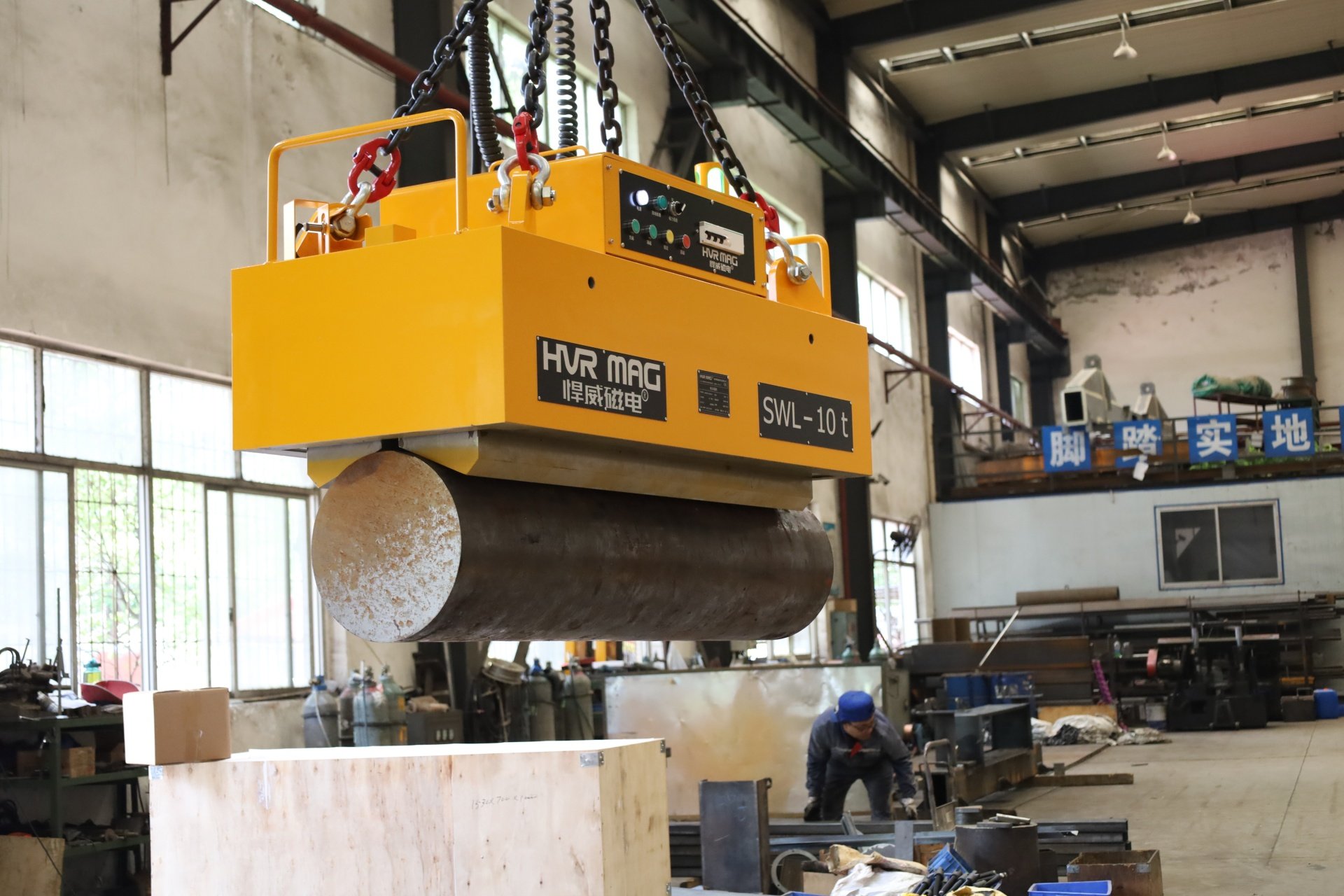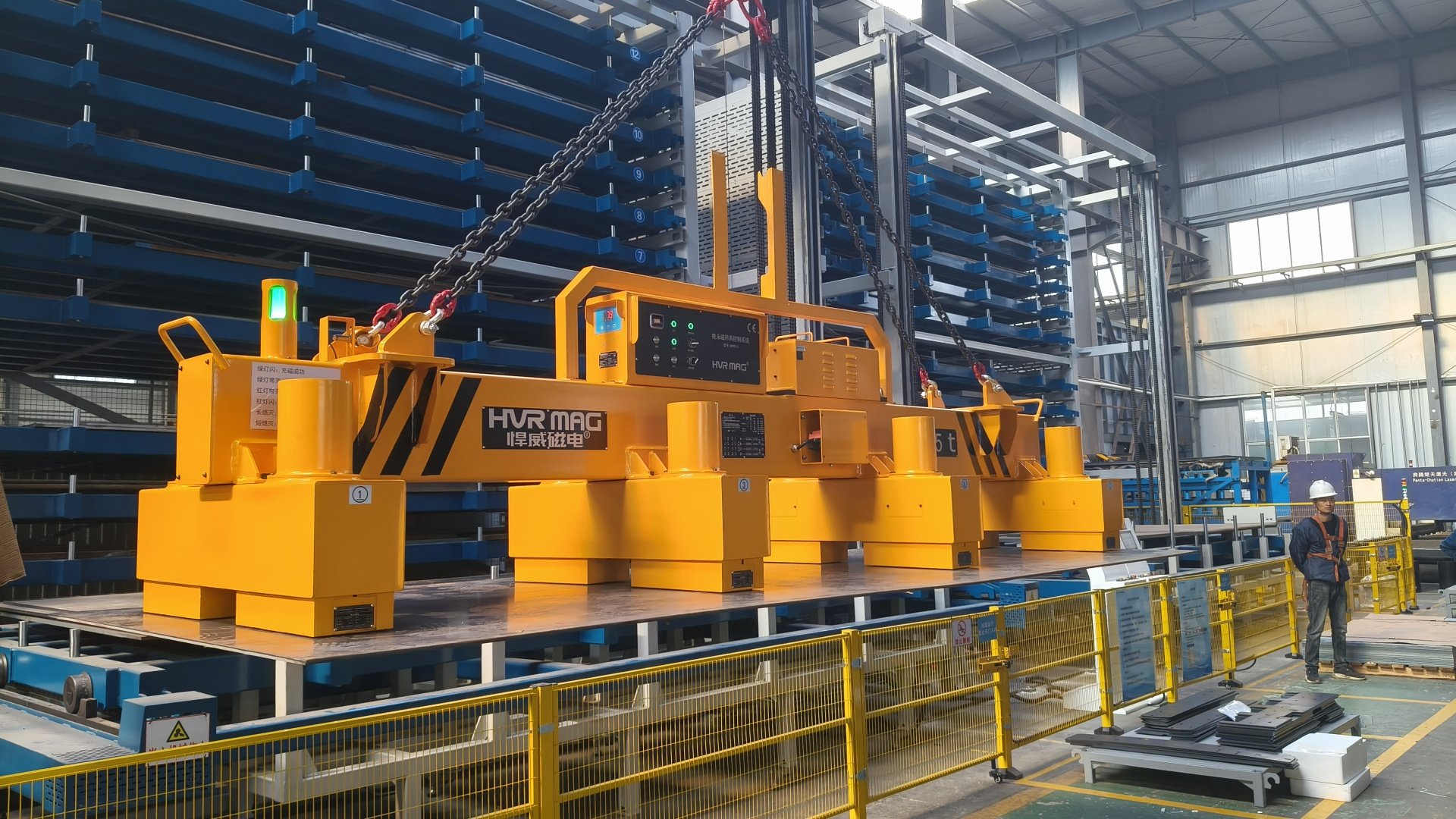


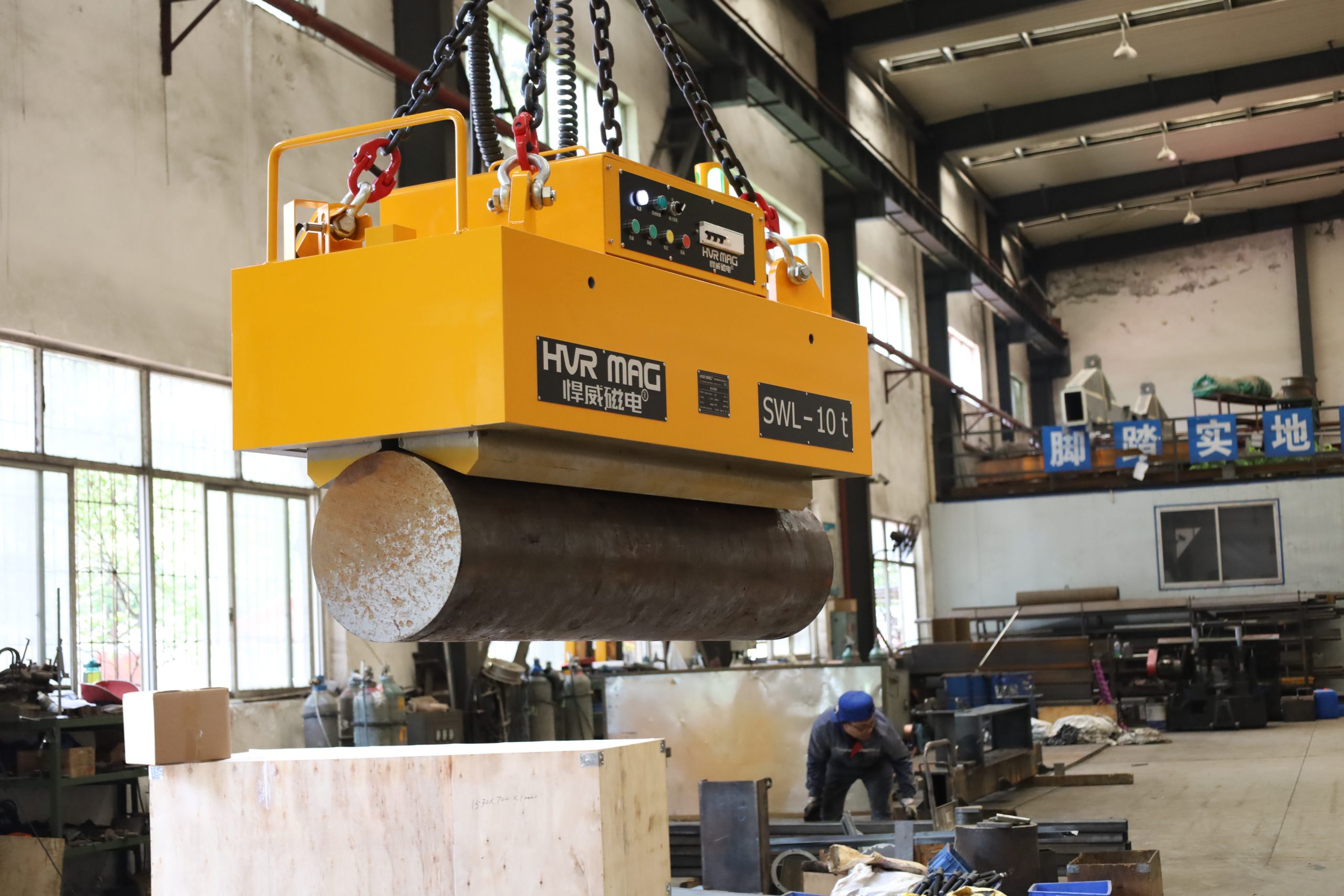
Power failure is one of the most common concerns when using magnetic lifting equipment. When a steel plate is suspended above the ground, many users naturally ask: Will the load fall if the power is suddenly cut off?
The answer depends on the type of magnetic technology being used. An electro-permanent magnetic lifter works differently from a conventional electromagnet and is specifically designed to maintain magnetic holding without continuous electrical power.
Why Doesn’t an Electro-Permanent Magnet Lose Its Holding Force?
The key difference is in how the magnetic field is generated and maintained.
A conventional electromagnet requires continuous electrical current to generate its magnetic field. If the power is interrupted, the electromagnetic force is lost.
An electro-permanent magnet, however, combines permanent magnetic materials with electromagnetic coils. The coils are mainly used to switch the magnetic circuit between magnetized and demagnetized states. Once the lifter has been magnetized, the permanent magnets maintain the magnetic field without requiring continuous power.
Therefore, if the electrical power is interrupted after magnetization, the magnetic circuit does not simply switch off. The lifter can continue to hold the ferromagnetic workpiece.
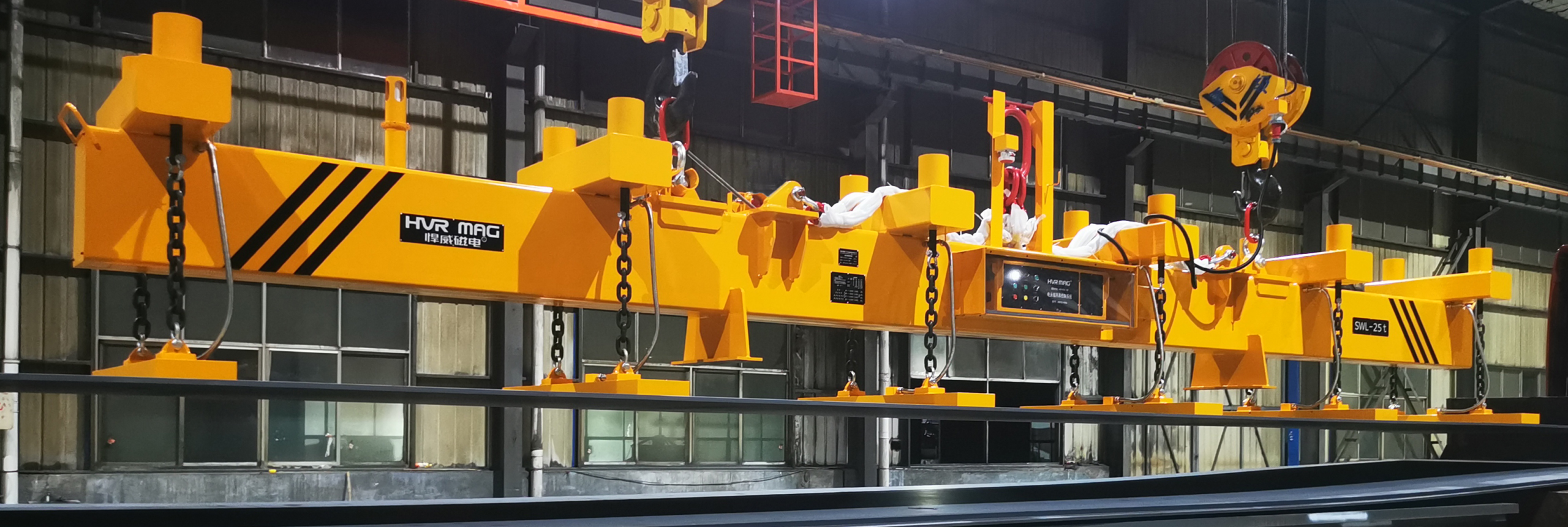
What Happens During a Sudden Power Failure?
When a power failure occurs while an electro-permanent magnetic lifter is holding a load, the control system and electrical supply are no longer actively powering the magnetization process. However, the permanent magnetic circuit remains in its holding state.
This is particularly important in overhead lifting applications. A temporary power interruption does not automatically mean an immediate loss of magnetic holding force.
However, this does not mean that every load will remain safe under every condition. The actual holding force depends on factors such as the workpiece material, thickness, surface condition, geometry, contact area, and air gap.
Electro-Permanent Magnet vs. Electromagnet
The difference can be summarized simply:
| Feature | Electromagnet | Electro-Permanent Magnet |
| —————————- | ———————- | ———————————- |
| Continuous power for holding | Required | Not normally required |
| Holding during power failure | Magnetic force is lost | Magnetic holding can be maintained |
| Magnetization | Electrical power | Electrical pulse |
| Demagnetization | Electrical control | Electrical pulse |
| Suitable for automation | Yes | Yes |
For applications where power interruptions are possible, the ability to maintain magnetic holding without continuous power can be an important consideration.
Why Is This Important in Industrial Applications?
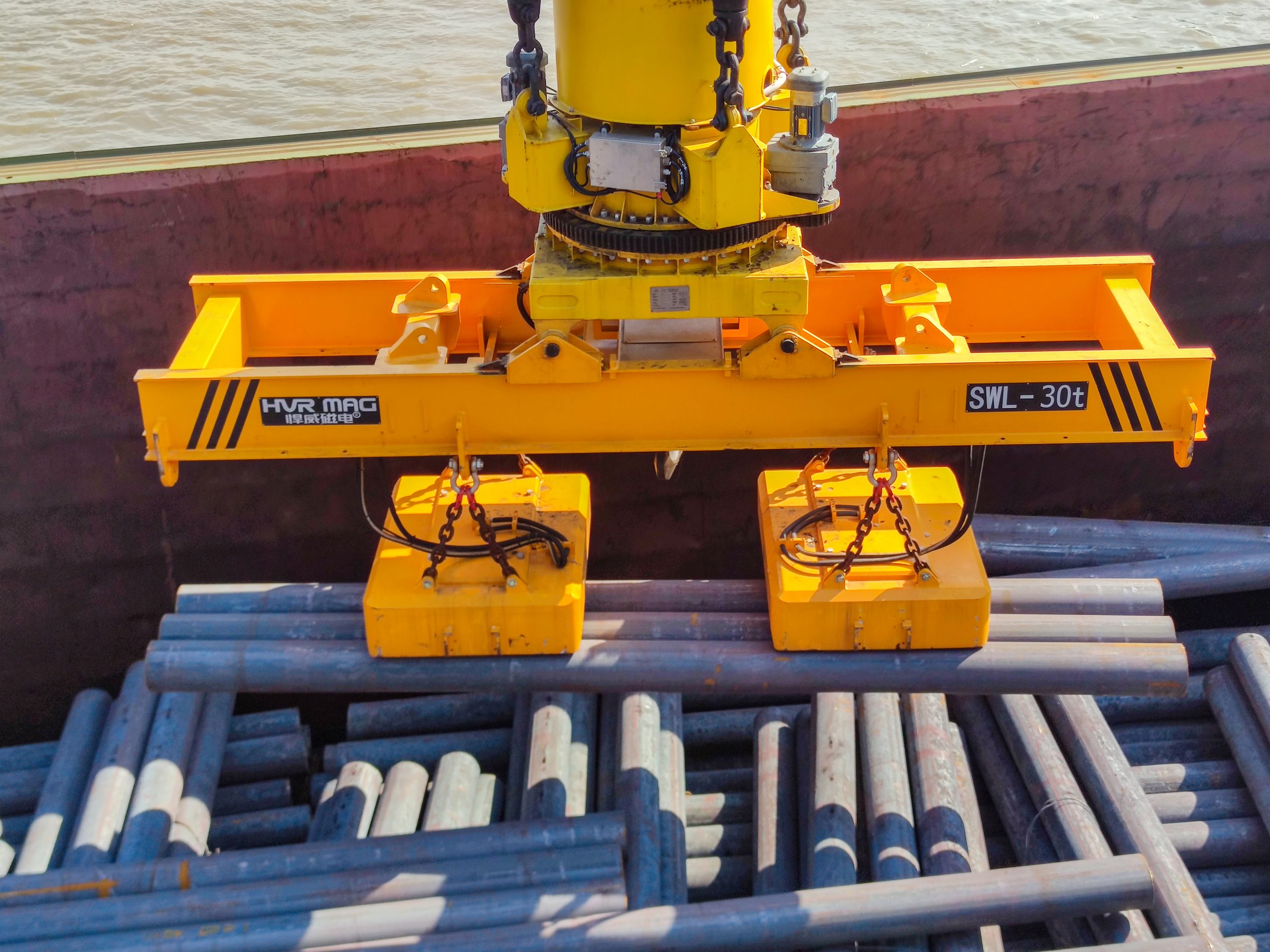
Electro-permanent magnetic lifters are commonly used for steel plate handling, laser cutting, shipbuilding, metal fabrication, steel service centers, and automated material handling.
In these environments, lifting equipment may operate above cutting tables, production lines, storage areas, or other working zones. Reducing dependence on continuous electrical power can help improve the reliability of the lifting process and reduce the risk associated with unexpected power interruptions.
For automated systems, electro-permanent magnetic grippers can also be integrated with cranes, gantries, and robots where controlled magnetization and demagnetization are required.
Factors That Affect Magnetic Holding Force
Power failure protection does not eliminate the need for proper magnetic lifter selection. The available magnetic force is affected by steel grade, workpiece thickness, surface condition, rust, paint, scale, air gap, shape, and lifting orientation.
For this reason, the rated capacity of a magnetic lifter should not be treated as the actual capacity for every application. The complete working conditions should be evaluated before selecting the equipment.
FAQ
Q: Does an electro-permanent magnet need power to keep holding a load?
A: No. After magnetization, the permanent magnetic circuit can maintain the holding force without continuous electrical power.
Q: Will the load immediately fall during a power failure?
A: A power interruption does not automatically demagnetize an electro-permanent magnetic lifter. However, safe lifting still depends on correct equipment selection, workpiece conditions, magnetic contact, and the overall lifting system.
Q: Is an electro-permanent magnet safer than an electromagnet?
A: For applications where unexpected power interruptions are a concern, its ability to maintain magnetic holding without continuous power provides an important operational advantage. The overall safety of a lifting system still depends on proper design, installation, operation, and load conditions.