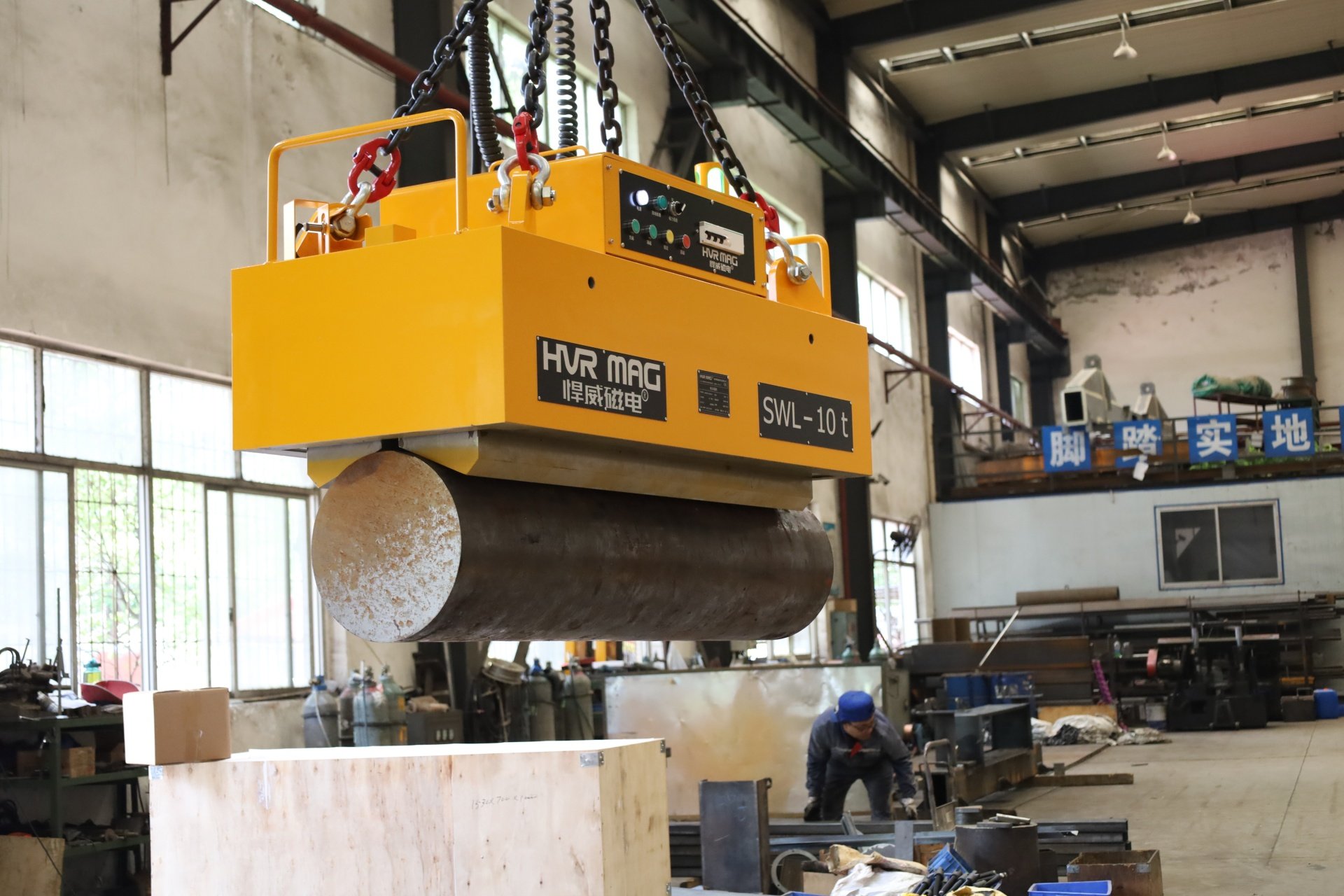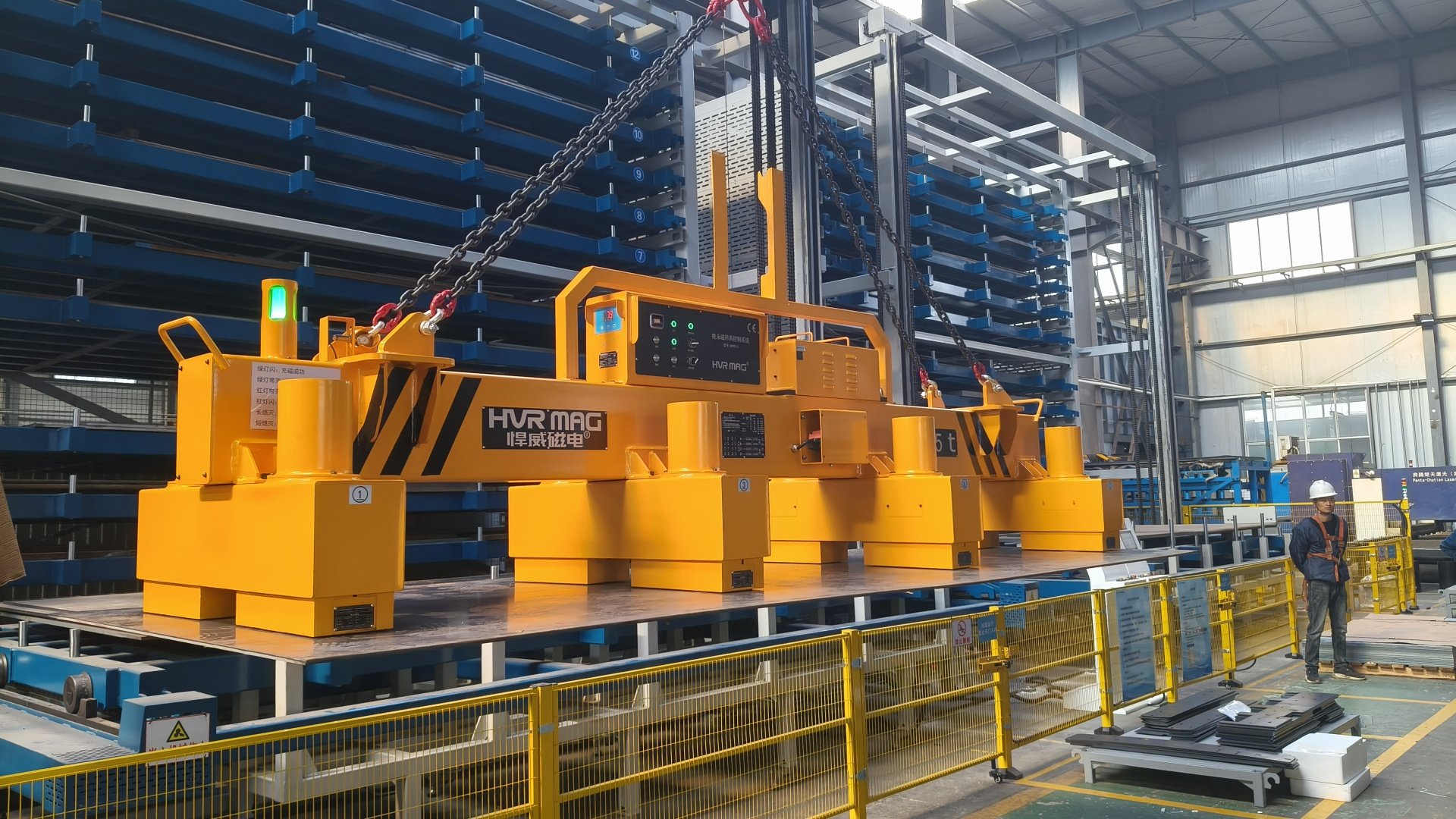


Magnetic lifting systems are widely used for handling steel plates, blocks, billets, and other ferromagnetic materials. Two common technologies are electromagnetic lifting magnets and electro-permanent lifting magnets.
Although both use magnetic force to lift steel, their working principles, power consumption, and behavior during power loss are different.
How Does an Electromagnet Work?
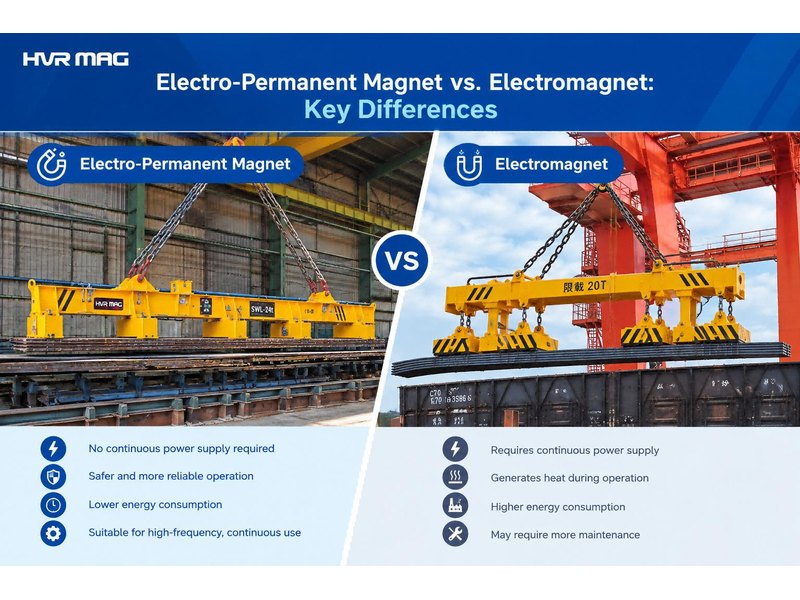
An electromagnetic lifting magnet generates magnetic force through an electric coil. When electricity flows through the coil, a magnetic field is created and the magnet can attract and lift steel materials.
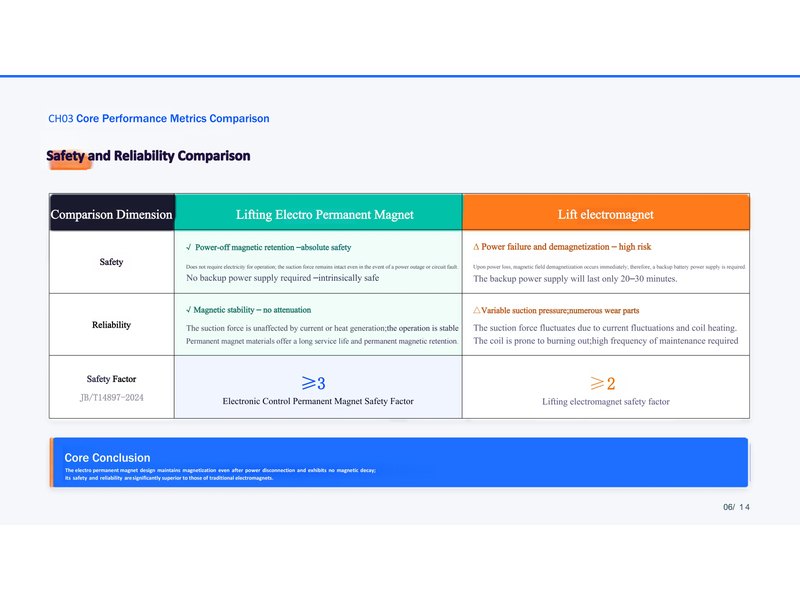
The main limitation is that the magnetic force depends on the power supply. If power is lost, the magnetic force can disappear. For this reason, some electromagnetic lifting systems use batteries or other backup systems for emergency protection.
Electromagnets suitable for applications such as:high-temperature materials, scrap steel, and materials with larger air gaps.
How Does an Electro-Permanent Magnet Work?
An electro-permanent magnet combines permanent magnetic materials and electrical control.
Instead of continuously using electricity to maintain the lifting force, a short electrical pulse switches the magnetic circuit between the magnetizing and demagnetizing states. Once the magnetic state is changed, the permanent magnetic force can remain without continuous power.
This means electricity is mainly used for magnetic switching and control, rather than continuously generating the lifting force.
Electro-Permanent Magnet vs. Electromagnet
| Feature | Electro-Permanent Magnet | Electromagnet |
| ——————– | ————————————————- | ——————————————————- |
| Holding force | Mainly provided by permanent magnets | Generated by electrical current |
| Continuous power | Not required | Required during lifting |
| Power-loss behavior | Magnetic holding force can remain | Magnetic force will lost |
| Energy consumption | Relatively low | Relatively high |
| Coil heating | Lower during normal operation | Continuous coil heating can occur |
| Typical applications | Steel plates, blocks, billets, automated handling | Scrap steel, high-temperature materials, large air gaps |
Safety and Reliability
One of the main advantages of electro-permanent magnetic lifting is its behavior during power interruption. Because the holding force is provided by permanent magnetic materials, the load can remain magnetically held when the control power is interrupted, depending on the equipment design and operating conditions.
References JB/T 14897-2024, which specifies a safety factor of at least 3 times for electrically controlled permanent magnet lifting devices and at least 2 times for lifting electromagnets.
Actual lifting safety still depends on factors such as load material, surface condition, air gap, rated capacity, and correct operation.
Energy Consumption
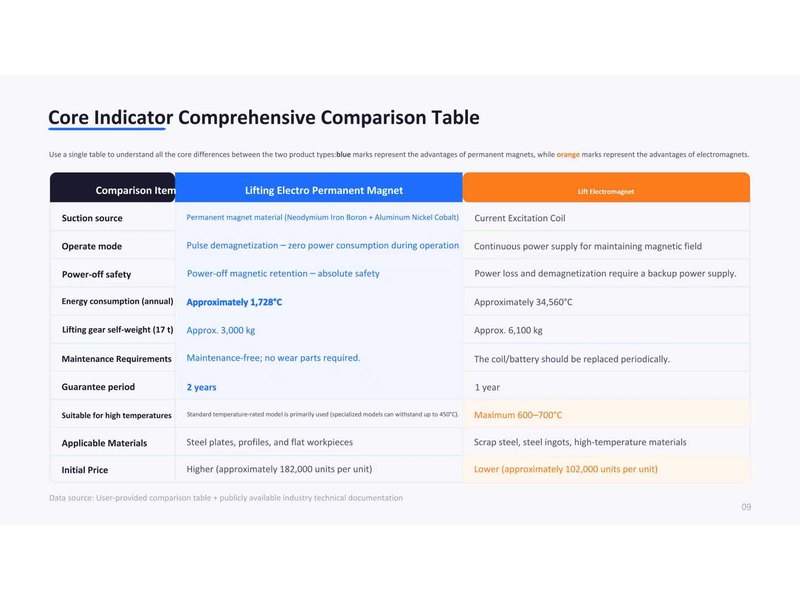
Electro-permanent magnets can significantly reduce electricity consumption because they do not require continuous power to maintain the lifting force.
In the comparison example provided in the source material, the estimated annual electricity consumption was approximately:
Electromagnetic lifting system: 34,560 kWh/year
Electro-permanent magnetic system: 1,728 kWh/year
The figures are based on specific operating assumptions in the comparison and should not be treated as universal values. Actual energy consumption depends on the equipment, lifting cycle, operating hours, and working conditions.
Which Magnetic Lifting Technology Should You Choose?
The right solution depends on the application.
An electro-permanent magnet solution can be considered when low energy consumption, reduced continuous power demand, and power-loss holding characteristics are important.
An electromagnet solution may be more suitable for applications involving high-temperature steel, scrap steel, or larger air gaps.
Before selecting a magnetic lifting system, users should consider the material type, load weight, surface condition, air gap, temperature, lifting frequency, and required safety factor.
Conclusion
Both electromagnets and electro-permanent magnets have their own applications in industrial material handling. The key difference is how they generate and maintain magnetic force.
For applications where energy efficiency and reduced dependence on continuous power are important, electro-permanent magnetic lifting technology provides an alternative to traditional electromagnets.
Choosing the right magnetic lifter requires matching the technology with the actual material and working conditions.