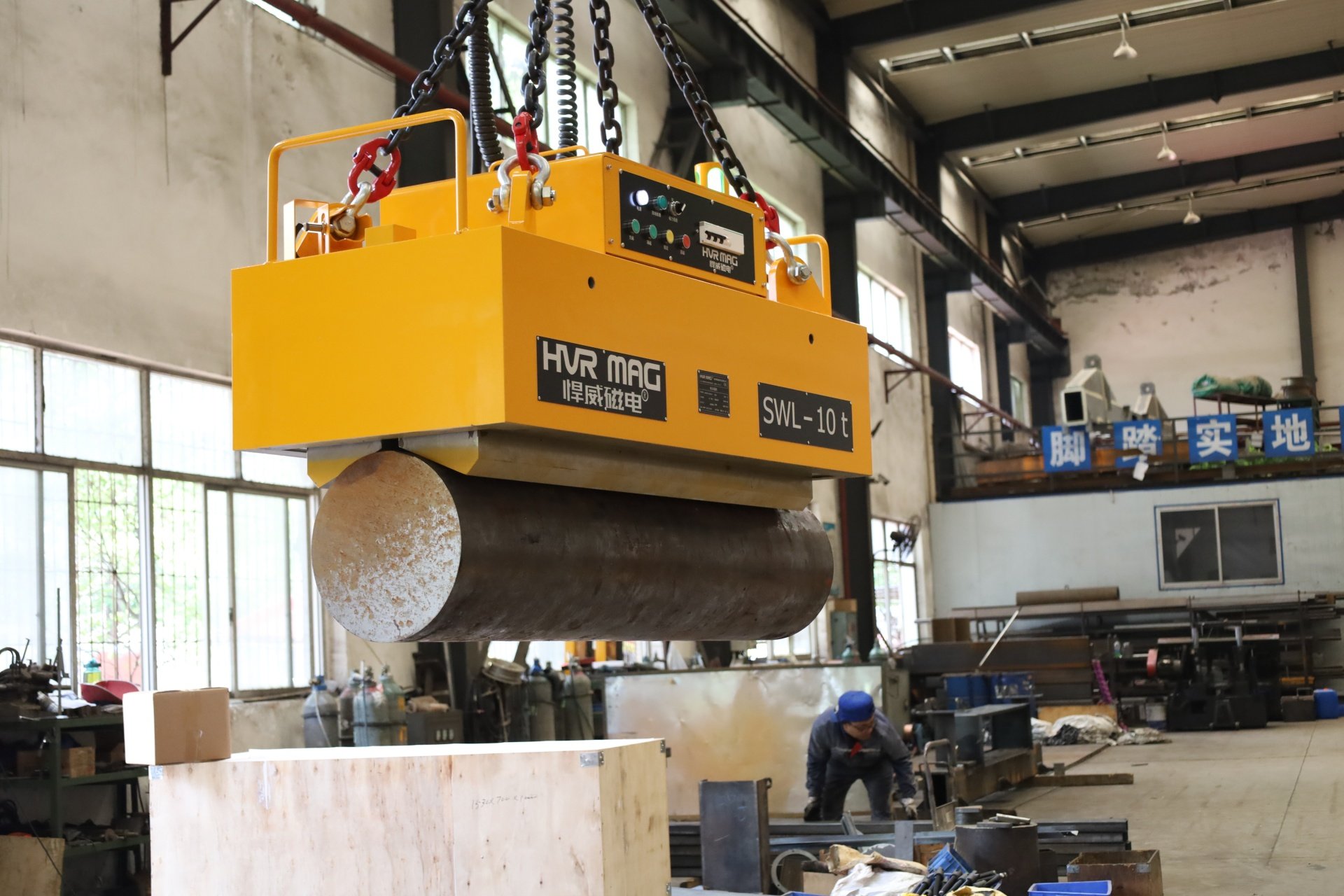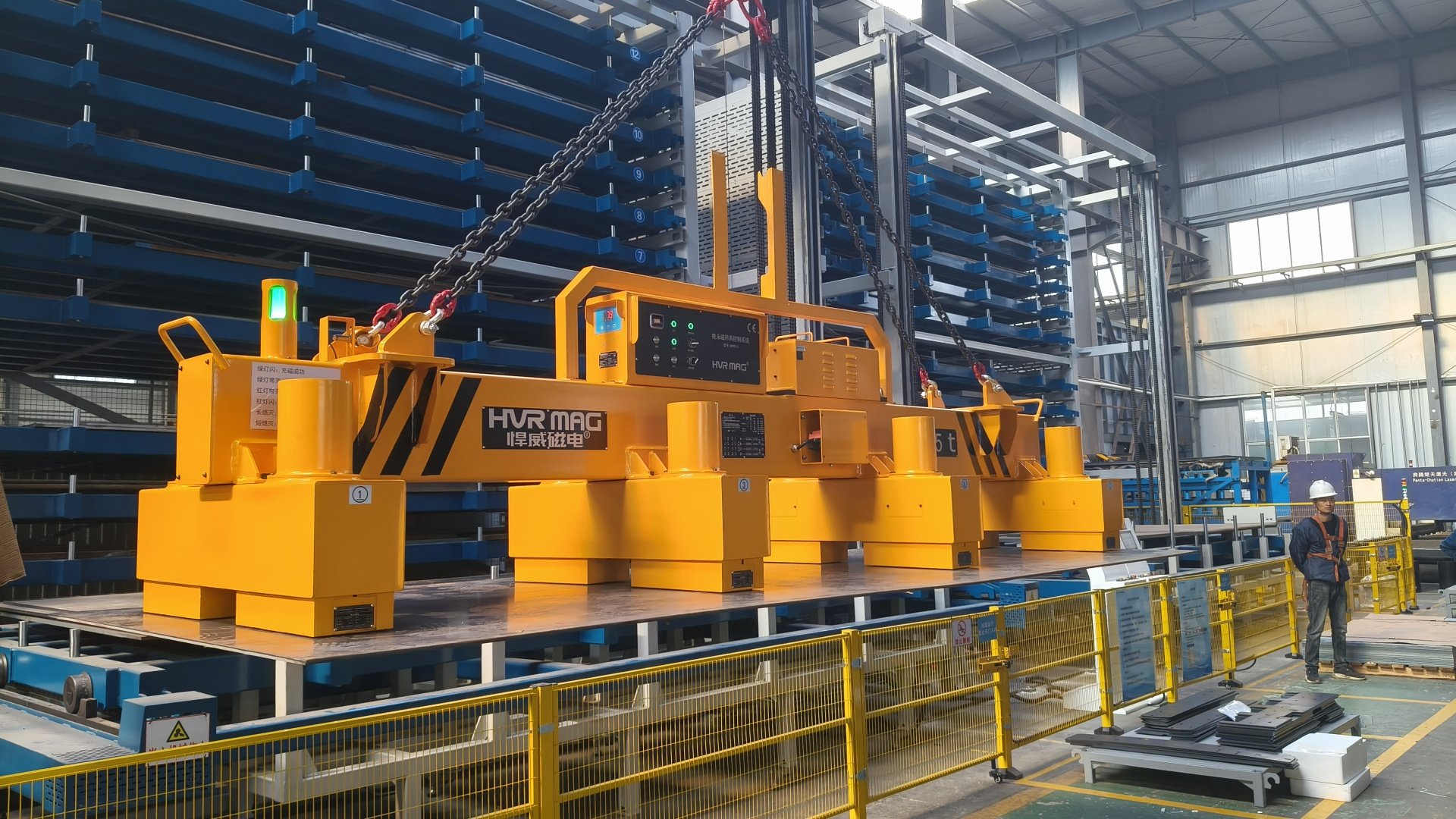


A practical, no-nonsense guide to how lifting magnets work, how permanent, electromagnetic and electro-permanent types compare, and the seven checks to run before you buy.
A lifting magnet is a below-the-hook device that uses magnetic force to grip, move and release ferrous loads — steel plate, sheet, coil, pipe, profiles, billets and slabs — without slings, clamps or hooks. If you are buying one today, the short answer is this: for most steel handling operations, an electro-permanent lifting magnet gives the safest grip and the lowest running cost, because it holds the load with permanent magnets and uses electricity only for a one-to-two-second switching pulse. This guide explains how each type works, where each one actually fits, and the practical checks to run before you sign a purchase order.
What Is a Lifting Magnet?
A lifting magnet replaces manual rigging. Instead of a crew walking into the danger zone to attach four sling legs, the operator lowers the magnet onto the load, switches it on, lifts, moves, and switches it off. One person does in seconds what two or three used to do in minutes.
The gains show up in three places:
- Speed — no hooking, no unhooking, no pinch points for hands.
- Access — you can pick a single plate out of a stack or reach material stacked against a wall.
- Damage — no crushing from chains and no scarring from mechanical clamps on finished surfaces.
The trade-off is that magnetic grip behaves differently from mechanical grip. It depends on contact quality, steel thickness, and temperature. Get those wrong and the magnet lets go. Almost every bad buying decision in this category comes from ignoring that fact, so it is worth understanding the basics before comparing products.
How Does a Lifting Magnet Work?
All lifting magnets work on the same physical principle: magnetic flux flows from the magnet’s poles, through a piece of steel, and back into the magnet, forming a closed loop. Break that loop and you break the grip.
Three things decide how much force you actually get on the shop floor:
1. Contact area. The more pole surface touching steel, the more flux crosses. A magnet face sitting flat on a clean plate performs at or near its rating. The same magnet on a bent, scaled or curved surface performs worse.
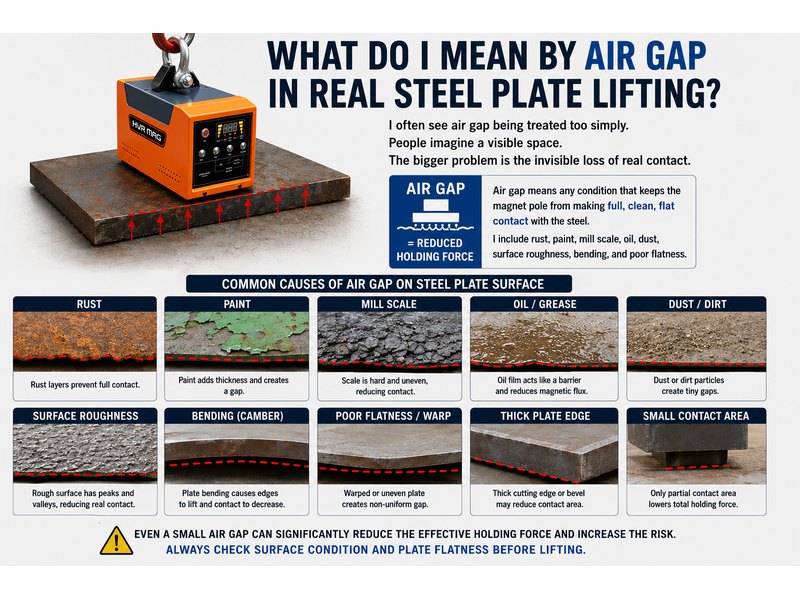
2. Air gap. This is the single most underestimated factor. Any gap between the magnet face and the steel — mill scale, rust, paint, weld spatter, oil film, dirt, or plate curvature — resists magnetic flow. Grip drops off rapidly as the air gap grows. A fraction of a millimetre matters.
3. Steel thickness and saturation. Thin sheet cannot carry unlimited flux. Once the material is magnetically saturated, adding a bigger magnet adds nothing but weight and cost. This is why thin-sheet work needs magnets designed specifically for it, not simply a larger version of a plate magnet.
Two numbers then follow, and confusing them is the most expensive mistake in this product category:
| Term | What it means | How it is measured |
|---|---|---|
| Pull-off / breakaway force | The force needed to tear the magnet away from an ideal test block | Laboratory conditions, prepared surface |
| Safe Working Load (SWL) | What you are allowed to lift every day | De-rated from pull-off by a design factor |
Reputable manufacturers publish an SWL that is de-rated from the pull-off figure — commonly in the range of 2:1 to 3:1. This matters practically: if a supplier quotes you only a pull-off number, ask immediately which factor they used to derive the SWL, and whether that SWL was tested on your material and thickness. Always buy against SWL, never against pull-off. Independent guidance on below-the-hook devices, including magnet ratings and proof testing, is set out in standards such as ASME B30.20 and the European EN 13155 for non-fixed load-lifting attachments; the UK HSE also publishes clear expectations for thorough examination of lifting equipment.
The Three Main Types of Lifting Magnets
Permanent lifting magnets
The simplest construction. Rare-earth magnets generate a permanent field, and a manual lever mechanically redirects the internal flux path to switch between “on” and “off”.
- Strengths: no power source at all, low purchase price, essentially fail-safe.
- Limits: manual switching means an operator must reach the magnet, they are hard to automate, and releasing a sticky thin sheet can be a fight.
Best for: low-frequency manual moves, maintenance shops, and work with no available power.
Electromagnetic lifting magnets
A coil generates the field, so the magnet is only magnetic while current flows.
- Strengths: very deep flux penetration, high tolerance of air gaps, and the ability to handle rough surfaces and hot material far better than the alternatives.
- Limits: the load drops if power fails unless you add a battery backup system. The crane needs a dedicated power cable and control cabinet. Coils run hot, draw continuous current, and are the usual failure point. Running costs and maintenance are the highest of the three.
Best for: scrap handling, very high capacities, irregular loads with large air gaps, and continuous high-temperature duty.
Electro-permanent lifting magnets
The hybrid that now dominates modern steel handling. It combines two magnetic materials inside one body — a magnetically hard material (typically NdFeB) and a semi-hard material (typically Alnico). A short electrical pulse flips the polarity of the semi-hard material. In one state the two fields reinforce each other and the flux exits through the pole face (magnetised, load gripped). In the other, the flux circulates internally and almost nothing escapes (demagnetised, load released).
Once switched, the state holds with zero power.
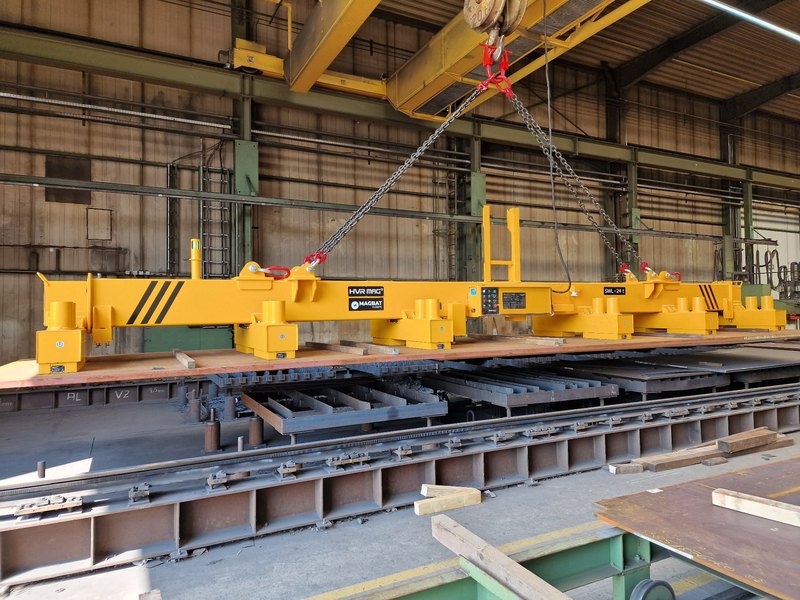
In practice, that buys you five things:
- Fail-safe by physics — Because holding comes from permanent magnets, not current, the load stays attached through a power cut or cable failure. For a detailed walkthrough, see the HVR MAG explanation of electro-permanent lifting magnet principles.
- Energy use near zero during the lift — Electricity is consumed only during the switch. Published figures for this technology commonly cite savings of up to 95% compared with a continuously energised electromagnet.
- Fast cycles — Magnetise and demagnetise in roughly two seconds, which is what makes it viable on a production line.
- Low maintenance — No continuously energised coil to burn out and no mechanical wearing parts inside the body.
- Clean release — Good demagnetisation leaves minimal residual magnetism in the workpiece, which matters before welding, machining or sensitive assembly.
It is not magic, and honest suppliers will tell you where it loses: standard electro-permanent designs prefer clean, flat contact at moderate temperatures. Very hot product, heavy mill scale, or large uncontrolled air gaps are electromagnet territory.
| Feature | Permanent | Electromagnetic | Electro-permanent |
|---|---|---|---|
| Power needed while holding | None | Continuous | None |
| Behaviour on power failure | Holds load | Load drops (needs battery backup) | Holds load |
| Switching | Manual lever | Instant | Push-button / remote / PLC (≈2 s) |
| Energy cost during lift | Nil | High | Near nil |
| Tolerance of rough surfaces / air gaps | Low | Highest | Moderate |
| Suits hot material | Poor | Best | Limited — ask for high-temp design |
| Automation-ready | Poor | Good | Best |
| Maintenance | Very low | Highest | Very low |
| Upfront cost | Lowest | Medium–high | Medium–high |
Where each one still earns its keep
Be sceptical of anyone claiming one technology wins everywhere. In practice: contingency handling mixed scrap at a demolition yard still belongs on an electromagnet; a maintenance team moving a plate twice a week does not need anything more than a manual permanent lifter. But if you move finished or semi-finished steel at ambient temperature, repeatedly, on a schedule — which describes steel service centres, fabrication shops, shipyards and ports — an electro-permanent lifting magnet is the default answer.
How to Choose the Right Lifting Magnet: A 7-Step Buyer’s Checklist
Work through these steps in order. Each one removes candidates, and each one is information you will need anyway when you request a quote.
Define the material, not just the weight
“We lift steel” is not a specification. The geometry drives the magnet design:
- Single thick plate — flat-faced standard magnets; see steel plate lifting magnets.
- Thin sheet — special pole geometry to avoid bending and to release one sheet at a time; see thin sheet lifting magnets.
- Coil, pipe and tube — V-shaped or contoured poles; see coil lifting magnets and tube and pipe lifting magnets.
- Profiles, beams and sections — articulated pole shoes; see profiles lifting magnets.
- Slab and billet — high-capacity deep-field designs; see billet and slab lifting magnets.
Match the magnet layout to the load length
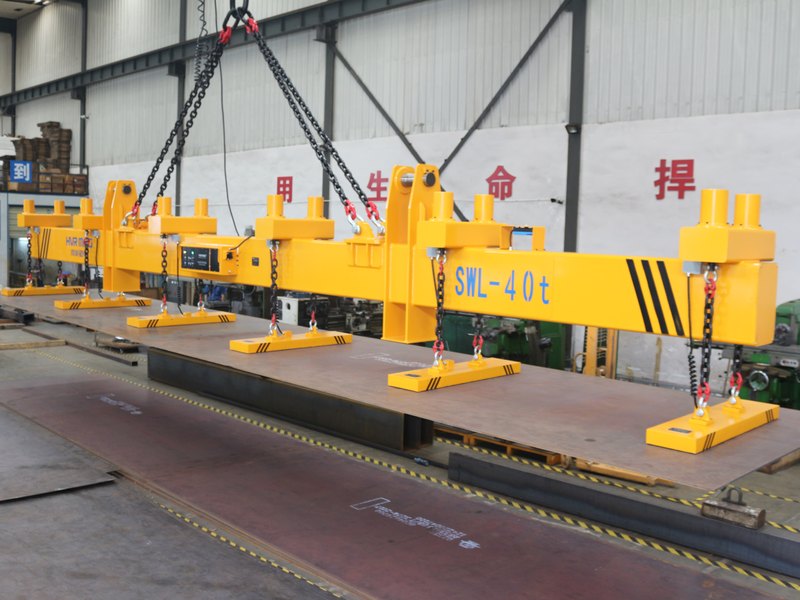
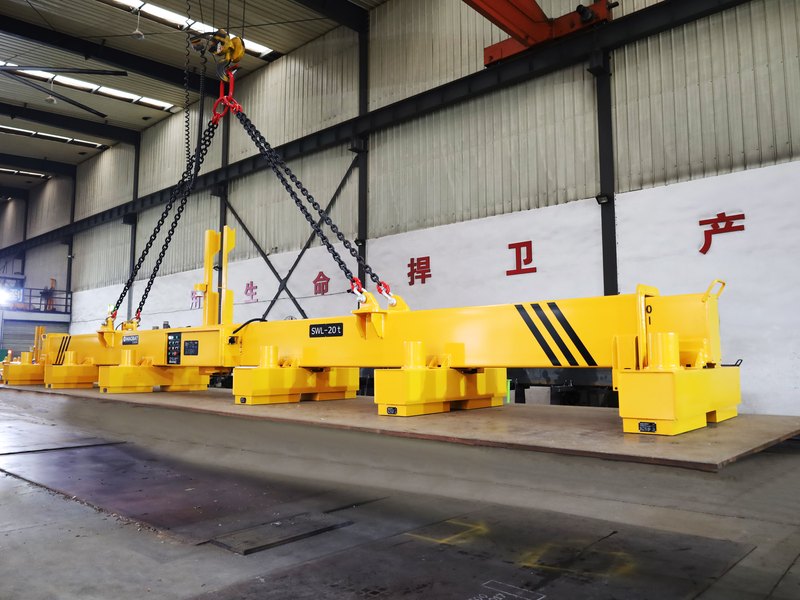
A single magnet at the centre of a long plate is how plates get bent and dropped. Long or flexible loads need a lifting beam with multiple magnet modules so the force is distributed. If your plate lengths vary day to day, an adjustable or telescopic lifting beam lets one tool cover the whole range instead of buying three fixed beams.
Be brutally honest about surface condition
Tell your supplier if the steel is painted, scaled, rusty, oily, shot-blasted, curved or welded. Expect them to de-rate the SWL accordingly. A supplier who does not ask about surface condition before quoting is guessing, and you will pay for the guess later.
Check temperature
Magnetic materials lose strength as they heat, and standard electro-permanent units have a working temperature ceiling well below that of red-hot product. If you are anywhere near warm or freshly cut material, say so up front and ask specifically for a high-temperature design. Never assume a standard unit will cope.
Count your cycles and time them
How many lifts per shift, and how many seconds per lift? This determines the control system, the duty cycle, the battery size, and whether automatic switching is worth specifying. Because the switching pulse takes about two seconds, this technology comfortably keeps pace in repetitive duty — but only if the controller and cooling design match your actual cycle rate.
Decide where the power and the machine come from
This is often overlooked. Options include:
- Crane-mounted with mains feed — the classic configuration.
- Battery-powered units — no trailing cable, ideal for yards, trucks and multi-bay layouts.
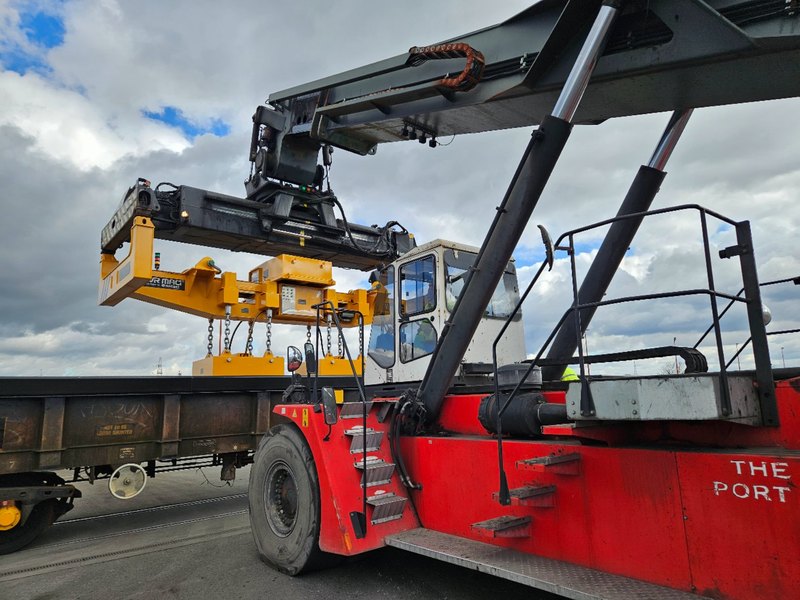
- Forklift-mounted magnets — turn an existing forklift into a fast plate and slab handler.
- Robot or automated crane — electro-permanent magnetic grippers integrate with robot arms and intelligent cranes.
- Cutting tables — dedicated lifting magnets for cutting systems handle part removal after plasma or laser cutting.
Demand the paperwork
Before payment, ask for: the SWL certificate for your material and thickness, the de-rating factor used, the switching cycle time, the IP rating of the enclosure, conformity to regional standards, and the operating manual in your language. If the unit will run in Europe, confirm CE certification and, where relevant, TÜV assessment. Your insurance company will eventually ask for these documents; collect them at purchase, not after an incident.
Five sizing mistakes that cost money
- Buying against pull-off force instead of SWL. Fix this by asking for the de-rating factor in writing.
- Ignoring the air gap. Scale, paint and curvature all silently cut your real capacity.
- Using one magnet on a long flexible plate. You will bend or drop it. Use a beam.
- Skipping temperature. Warm product is a common cause of disappointing field performance.
- Treating it as a commodity. Buying the cheapest unit without analysing the actual application means the “cheap” magnet gets replaced within a year.
What to send your supplier before asking for a quote
Copy this into your enquiry email. Complete answers mean a quotation you can trust:
Enquiry checklist — 9 items
Send these to any lifting magnet supplier. A quote you can trust starts here.
- Material type, grade and shape (plate / sheet / coil / pipe / profile / billet)
- Dimensions: length × width × thickness
- Maximum and typical load weight, plus load centre of gravity
- Surface condition (bare, painted, scaled, oily, rusty) and flatness tolerance
- Material temperature at the moment of lifting
- Available lifting machine (crane capacity, forklift, robot) and available power
- Lifts per hour and per shift
- Required certification standards and local regulatory requirements
- Indoor or outdoor use, including weather and corrosion exposure
For anything outside the standard catalogue — unusual shapes, multiple loads per cycle, very high capacity — a customised lifting magnet is usually cheaper over its life than force-fitting a standard model.
What you are actually paying for
Compare total cost, not invoice price. An electromagnet carries hidden infrastructure cost: the control cabinet, the cable reel, the backup battery system, higher energy draw every hour of every shift, and a coil that will eventually burn out. A manual permanent lifter is cheap to buy but costs an operator’s time on every single lift and cannot be automated.
An electro-permanent lifting magnet removes most of the infrastructure and nearly all the holding energy, then adds back cycle speed and automation capability. Real projects show what that looks like: four telescopic electro-permanent beams handling 75-tonne steel plates for a Spanish marine construction company, and battery-powered units moving 35-tonne slabs integrated with a forklift at a seaport. Read the case details for the 75-tonne plate project and the battery-powered slab handling solution.
Frequently Asked Questions
1. Will the load drop if the power fails?
No — provided you choose an electro-permanent or a permanent lifting magnet. Holding force comes from permanent magnets, so electricity is needed only for the two-second switching pulse. A load already attached stays attached through a total power cut. With a conventional electromagnet, the load drops unless a battery backup system is installed, which is an extra cost and an extra maintenance item.
2. What is the difference between pull-off force and Safe Working Load?
Pull-off force is the laboratory figure — how much force it takes to tear the magnet off a clean, ideal test block. SWL is the capacity you are permitted to lift in daily service, de-rated to account for real surface conditions, dynamic loads and air gaps. Suppliers commonly apply a factor between roughly 2:1 and 3:1. Always compare SWL to SWL, and never accept a pull-off figure presented as a lifting capacity.
3. Can a lifting magnet handle hot steel?
Standard electro-permanent magnets are designed for ambient-temperature material and lose strength as the load heats up. If any part of your process involves warm or freshly cut steel, declare the maximum temperature in your enquiry and ask for a purpose-built high-temperature design. For continuous high-temperature duty such as scrap or billet handling above the limits of permanent magnet materials, an electromagnet is still the right tool.
4. Do I need an overhead crane, or can it run from a forklift or robot?
A crane is the most common mounting, but it is far from the only one. Battery-powered units remove the cable entirely, forklift-mounted magnets turn an existing truck into a plate handler, and magnetic grippers integrate directly with robot arms, CNC loaders and intelligent cranes via PLC. Tell your supplier what machine you already own, because this often changes the recommendation more than the load weight does.
5. How much maintenance does an electro-permanent lifting magnet need?
Very little. There is no continuously energised coil to overheat and burn out, and there are no internal mechanical wearing parts, so routine maintenance is essentially visual inspection of the pole faces, the suspension and the cable connections, plus periodic verification of lifting capacity. Keep the pole faces clean and free of embedded swarf — packed debris creates exactly the air gap that eats your grip.
Ready to Specify the Right Lifting Magnet?
Choosing a lifting magnet is an engineering decision, not a catalogue exercise. The difference between a unit that performs for a decade and one that disappoints in six months is usually the quality of the questions asked before purchase.
HVR MAG has spent more than 20 years designing and manufacturing electro-permanent magnetic solutions, holding 40+ patents, with an ISO 9001 and ISO 14001 certified facility and CE and TÜV certified product lines supplied to 2,000+ customers across Europe, the Americas, Africa and Asia. Our team builds everything from standard single-plate lifters to fully customised multi-magnet beams — with options for anchor points, suspension brackets, waterproofing and high-temperature duty.
Request Your Free Magnet Sizing Assessment
Send us the nine items in the enquiry checklist above, and our engineers will recommend the configuration that actually fits your operation — including telling you when a smaller or simpler unit will do.
Get a free quote → Browse lifting magnetsPrefer to see proof first? Explore our application case studies.
References
- ASME B30.20, Below-the-Hook Lifting Devices
- EN 13155, Cranes — Safety — Non-fixed load lifting attachments
- UK Health and Safety Executive, Lifting equipment at work
- ISO 9001 Quality Management
- ISO 14001 Environmental Management
- Lifting Equipment Engineers Association (LEEA)