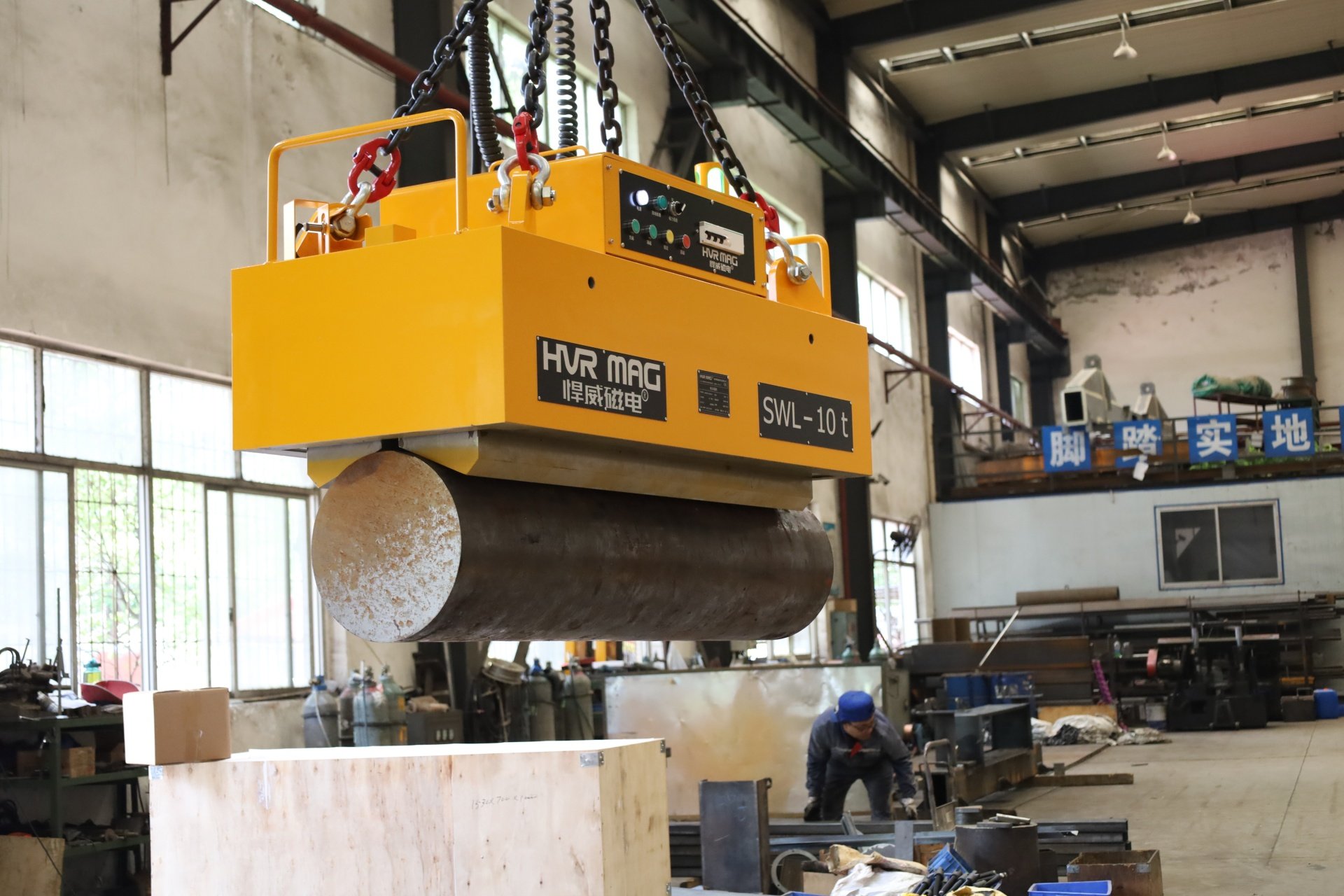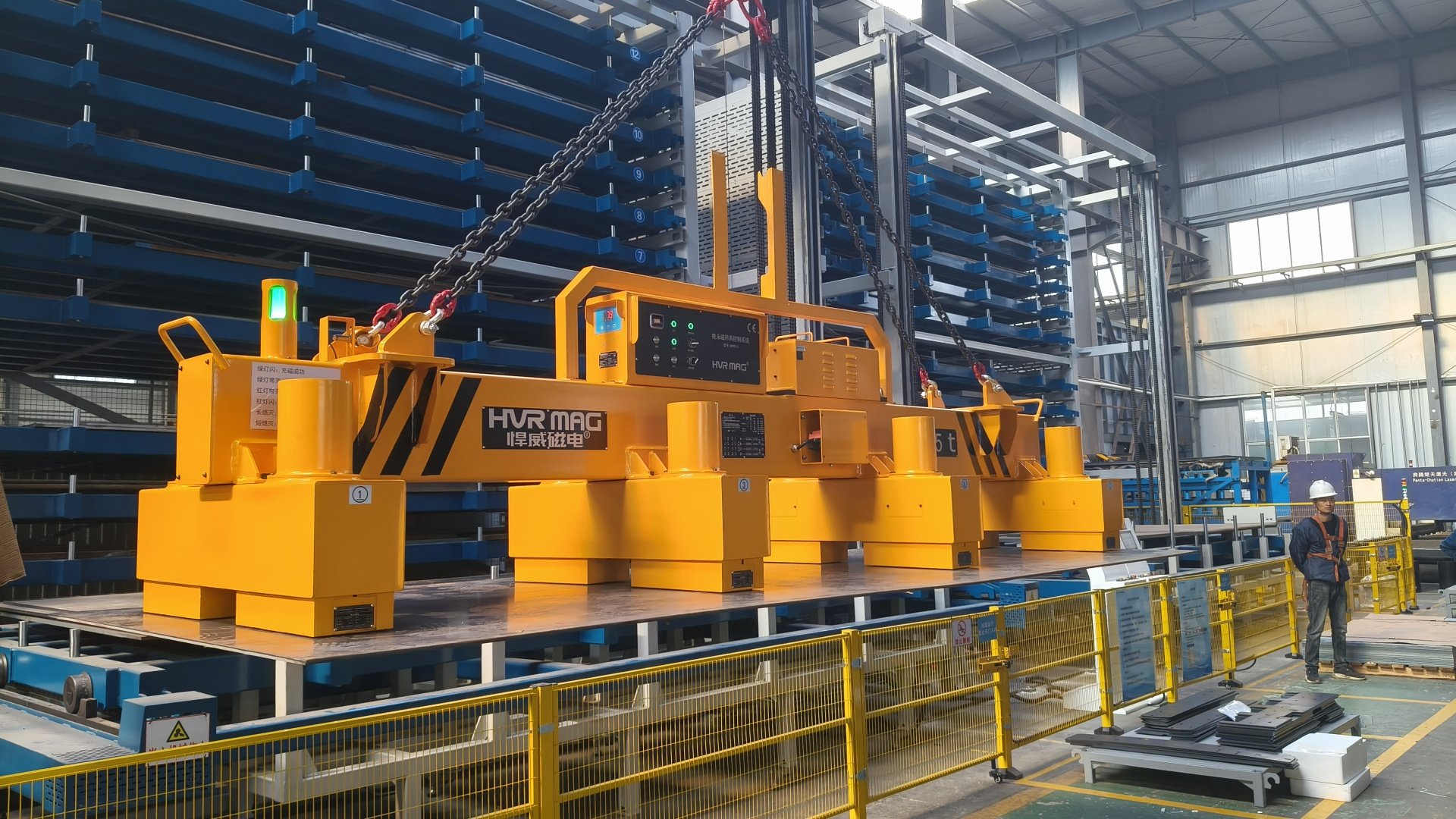



Many factory managers worry about the hidden effects of magnetic lifting- Residual Magnetis. Specifically, they ask if the lifting process leaves residual magnetism in their workpieces. This concern is valid because magnetic interference can ruin precision welding and CNC machining.
What is Residual Magnetism?
Simply put, residual magnetism is the magnetic field that remains in a material after you remove the external magnetic source. When you lift a steel plate, the magnetic flux aligns the internal atoms of the metal. If the magnetic lifting tool does not “clean” these fields during release, the steel becomes a weak permanent magnet.
Why Traditional Electromagnets has Residual Magnetism
Traditional electromagnets often struggle with this issue. They rely on a constant flow of electricity to maintain the grip. However, when you cut the power, the magnetic field does not always disappear instantly. Consequently, the steel plate might still attract tiny metal chips or interfere with sensitive sensors.
The EPM Solution: The Science of “Neutralization”
Electro-permanent magnetic lifting (EPM) solve this problem through a sophisticated “Demagnetization Cycle.” Unlike regular magnets, an electro permanent magnetic lifting uses two types of magnetic materials: AlNiCo and Neodymium. During the lifting phase, their magnetic fields combine to create a powerful external pull.


When you release the load, the electro permanent magnetic lifting controller sends a precise reverse electric pulse. This pulse flips the polarity of the AlNiCo magnet instantly. As a result, the magnetic flux retracts and flows inside the lifter rather than through the steel. Therefore, the workpiece returns to its neutral state almost immediately because the external field effectively becomes zero:
- No impact on subsequent processing: The slight residual magnetism after unloading the electro-permanent magnet typically does not affect CNC machine tool cutting, laser cutting, or welding (it will not cause arc deviation).
- No additional demagnetizer required: For most industrial applications, the demagnetization cycle built into the electro-permanent magnet is clean enough, eliminating the need for specialized demagnetizing equipment like that required for ordinary magnets.

Real-World Benefits for Your Workshop
- Flawless Welding: Residual magnetism causes “arc blow,” which pushes the welding arc away from the joint. Electro permanent magnetic lifting prevents this, ensuring your welds remain strong and clean.
- Smooth CNC Machining: Magnetic workpieces attract sharp metal shavings that can scratch surfaces. Because electro permanent magnetic lifting leaves no significant magnetism, your tools stay clean and your finishes stay smooth.
- Automated Efficiency: Robotic arms can pick and place parts faster when they don’t have to fight “sticky” residual fields.
Choosing the Right Lifting Tool
Ultimately, the quality of your finished product will be affected by the magnetic lifting tools you use for material handling. While all magnets create a field, only EPM technology offers the control needed to eliminate residual magnetism effectively. By choosing electro permanent magnetic lifting equipment, you protect your downstream processes and reduce the need for expensive secondary demagnetizers.