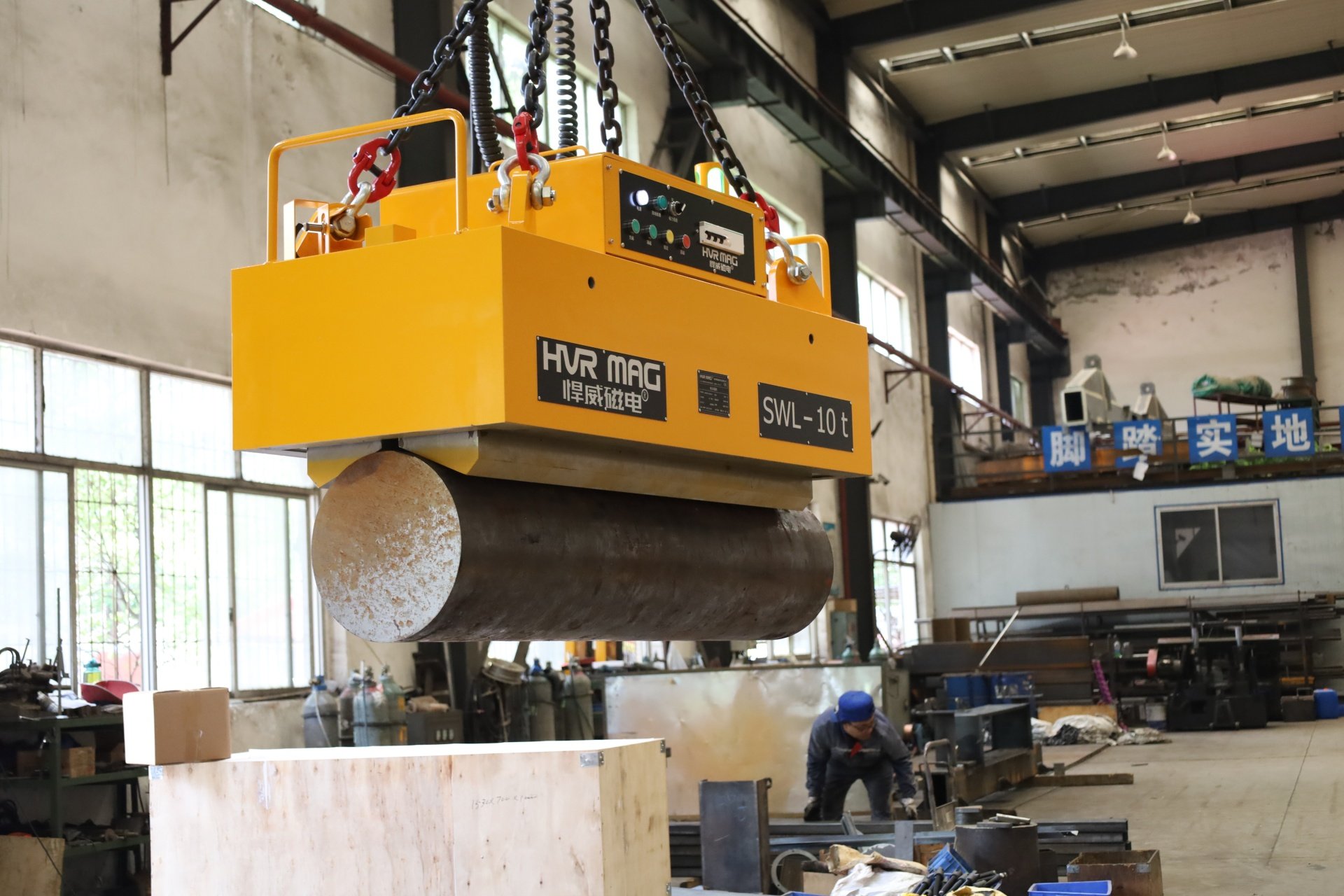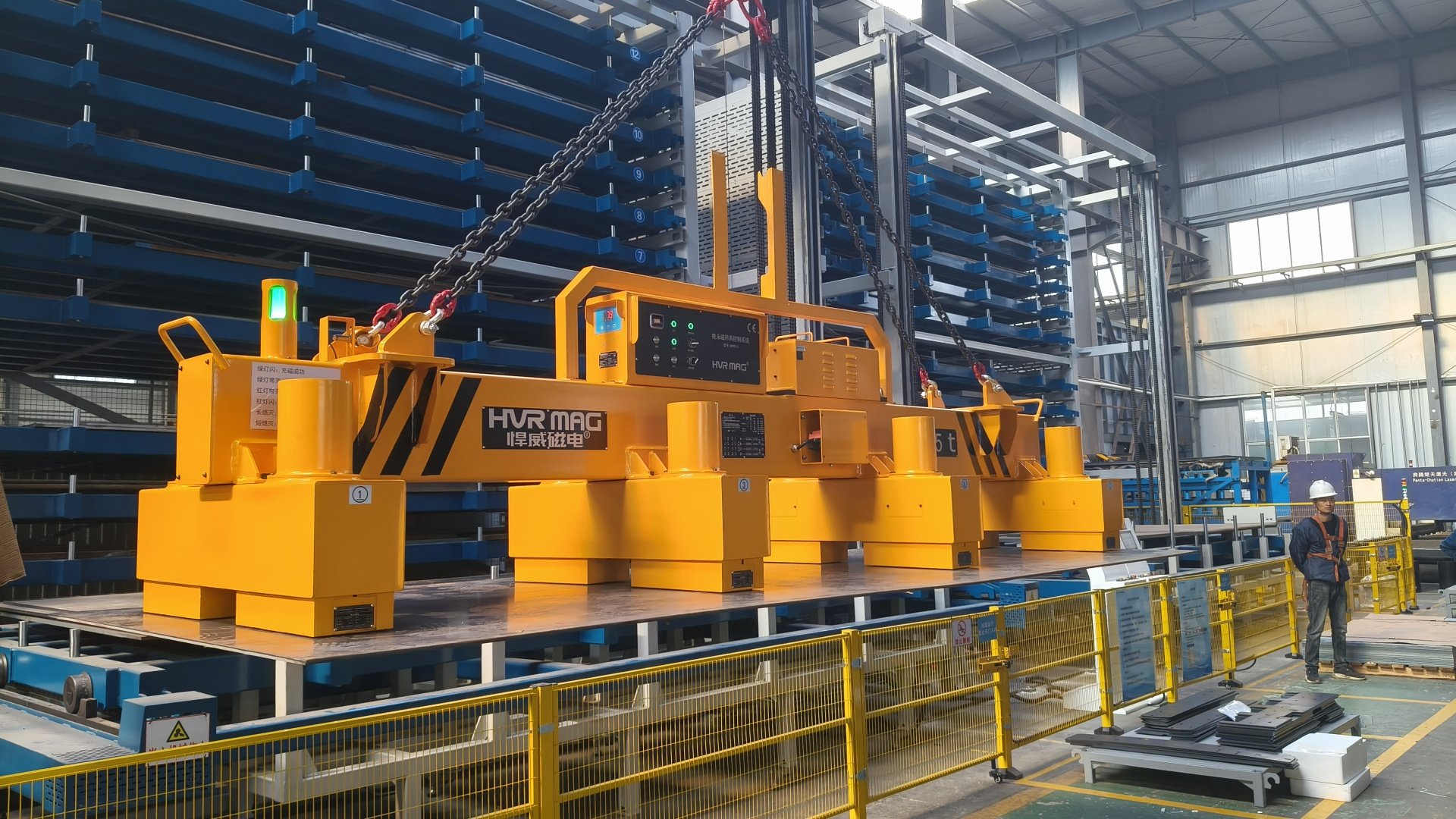


Is the 3:1 Safety Factor of Magnetic Lifting Devices a Cost Trap?My answer is: From a purely material и manufacturing first cost perspective, a 3:1 design would indeed be more expensive than a 2:1 design; however, from a life-cycle, long cost и risk control perspective, it is generally considered a “reasonable upper limit” rather than an “excessive waste.”
Why is a 3:1 Safety Factor “Аppropriate” rather than “Эxcessive”?
For magnetic lifting devices that rely on attraction, a 3x safety factor isn’t just a numbers game. Actually,it’s a necessary requirement based on physical characteristics and safety redundancy.
Addressing the nemesis of “air gaps”,the biggest threat to magnetic lifting devices isn’t power outages, but air gaps (the workpiece not being in contact with the magnetic poles). If the workpiece has rust, scale, or slight warping, the actual attraction force will decrease exponentially.
A lifting device designed with a 2:1 safety factor is safe lifting 1 ton of cargo under ideally flat conditions. However, with slight rust (assuming a 40% loss in attraction force), its actual safety margin drops from 2x to 1.2x, entering the danger zone.
A 3:1 safety factor lifting device, even after a 40% loss in attraction force, still has a 1.8x safety margin and remains safe.
Absorbing dynamic impacts: When a crane is running, the dynamic loads generated during lifting and braking instantly increase the “actual weight” of the workpiece. A coefficient of 3 can effectively absorb such shocks without causing instability.
Will costs really increase linearly?
The concern about higher costs is reasonable, but it’s important to note that costs won’t increase by 50% simply because the safety factor increases from 2x to 3x.
Diminishing marginal costs: A large portion of the cost of magnetic lifting devices lies in the mechanical structure (shell, lifting lugs, control box) and control system (controller, battery/cable). These costs are essentially fixed in the 2x and 3x designs.
Increasing from 2x to 3x primarily involves increasing the amount of magnet material (neodymium iron boron/ferrite) or optimizing the magnetic circuit design. Typically, the increase in manufacturing costs is far less than the increase in the safety factor, around 10%-20%, not doubling.
Hidden cost savings: If you choose a 2x lifting device to save money, the equipment damage, production stoppages, and even personal injury losses resulting from a single workpiece fall will far outweigh the cost savings from purchasing a 3:1 lifting device.
Why HVR MAG choose 3:1 Safety Factor?
The 3:1 safety factor is not arbitrary. It appears in technical specifications from manufacturers worldwide. HVR MAG we design our electro-permanent magnetic lifting device to meet strict international standards like EN 13155 and ASME requirements.
The real-world lifting conditions are rarely perfect. The 3:1 safety factor is not a cost trap but an investment in reliability. For rough surfaces, hot materials, or high-value loads, this standard is essential . Therefore, when evaluating magnetic lifting devices, consider your specific application. For clean, flat, room-temperature steel in controlled environments, some may safely use 2:1 designs. However, for general industrial use where conditions vary, the 3:1 safety factor provides peace of mind that no budget can replace.
Remember,the safest magnetic lifting device is one that never drops its load. The 3:1 safety factor helps ensure exactly that outcome.